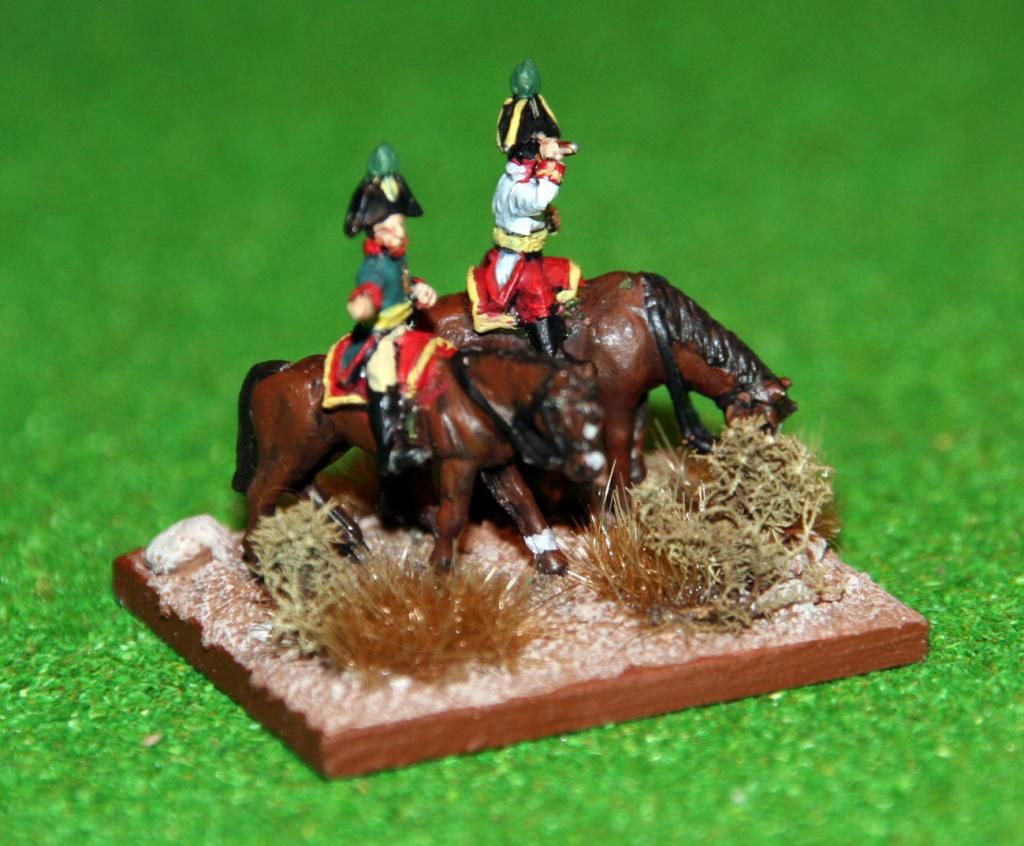
Showing posts with label General and Command. Show all posts

Thursday, 18 August 2016

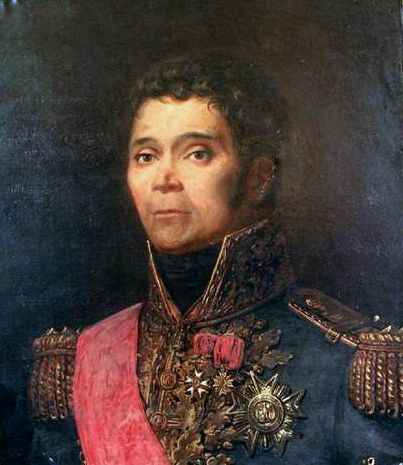
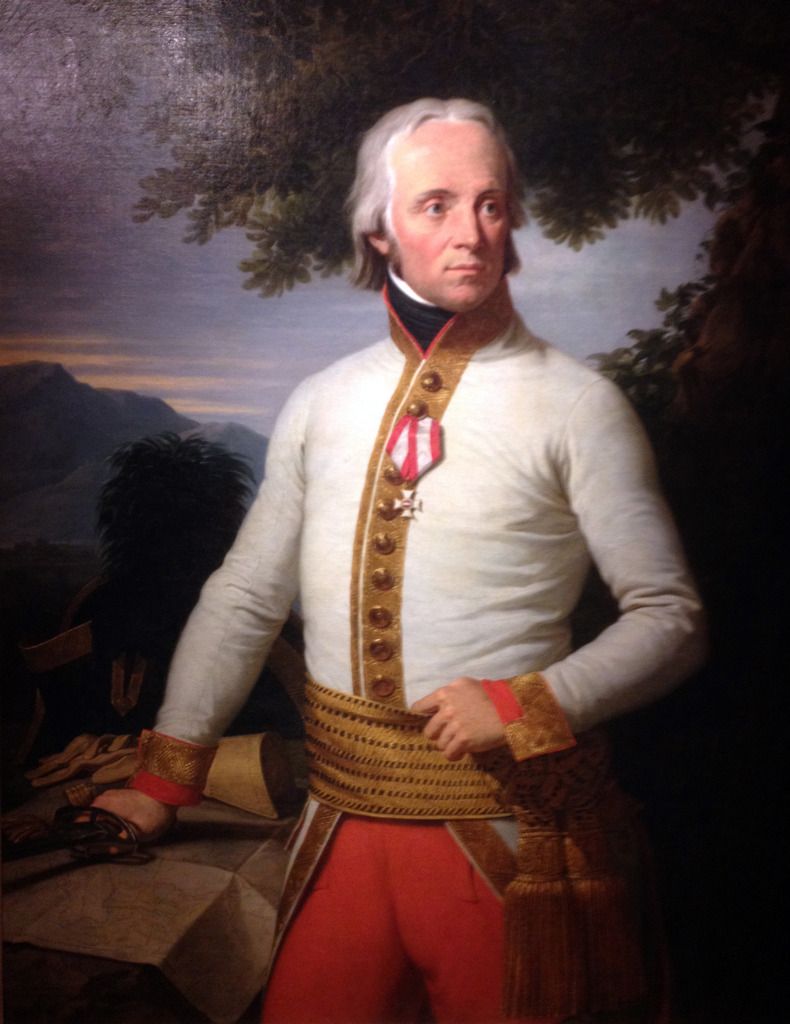
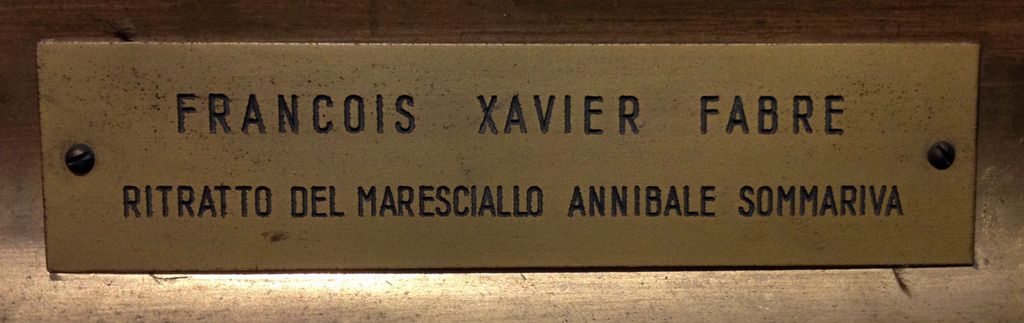
Hannibal Marchese Sommariva - painting by Francois Xavier Fabre

The wonderful painting of Hannibal Marchese Sommariva was on view in a temporary exhibition at the Galleria d'Arte Moderna Milano when we visited. I felt exceptionally lucky to visit the museum and find this piece of art - I have been visiting northern Italy on holiday for a few years now and always keep an eye out for Napoleonic era paintings, so to find a painting of an Austrian general from this period was very exciting.


Biographical Essay (by Digby Smith)
Hannibal Marchese Sommariva was born on 10 March 1755 in Lodi, Lombardy and entered Austrian military service in 1771 as an Unterleutnant in the Dragoon Regiment "Bettoni" N°28. In 1773 he was promoted 2nd Rittmeister and he distinguished himself both in the War of the Bavarian Succession in 1778 and in the wars against the Turks in 1788/89. Promoted to 1st Rittmeister in 1778, Major in 1780 and to Oberstleutnant in 1793 when he was posted to the Netherlands. He was distinguished in the 1st battle of Fleurus on 16 June 1794, and in 1796 was promoted Oberst and made CO of his regiment. He was again distinguished in the clash at Amberg on 24 August of that year.

In the 1799 campaign Sommariva's regiment served in Italy where, on 26 March, they took 14 guns from the French at the clash of Legnano. Four days later, his regiment again contributed greatly to the French defeat at Perona. At the battle of Magnano on 5 April 1799, his regiment saved the day at one critical point and this led to the Austrian victory over French General Scherer. For this, Sommariva was awarded the Knight's Cross of the Military Maria Theresian Order. His conduct in the subsequent campaign led to his promotion to Generalmajor on 2 October of that year.


In 1800 GM Sommariva took over command of the Tuscan army and was appointed GOC the state. The French invasion brought his rule to an end and he was forced to flee his headquarters at midnight 14/15 October. He rejoined the Austrian army's main body on 6 January 1801 and was given command of a brigade in the rearguard. He fought minor actions at Montebello and other points.


In 1805 he again served in Italy as brigade commander in FML Vukassovich's division of General Bellegarde's right wing. In 1806 he was appointed Proprietor of Cuirassier Regiment N°5 and on 1 January 1807 Sommariva received his promotion to Feldmarschalleutnant and appointed Military Commander in Silesia (Troppau). 

During the beginning of the campaign of 1809 Sommariva commanded a division in Orsini-Rosenberg's IV Corps, and on 19 April, at Dünzling, he charged and overthrew Pajol's brigade. He fought again at Eggmühl on 22 April, where he commanded the rearguard of the right wing. He was then transferred to FZM Kolowrat's III Corps and fought at Linz-Urfahr on 17 May, but did not serve in the later actions of this campaign or in 1812.
In 1813 he commanded a division in the Army of Innerösterreich. On 21 January 1817 he was promoted General der Kavallerie. He died on 10 July 1829 in Vienna.

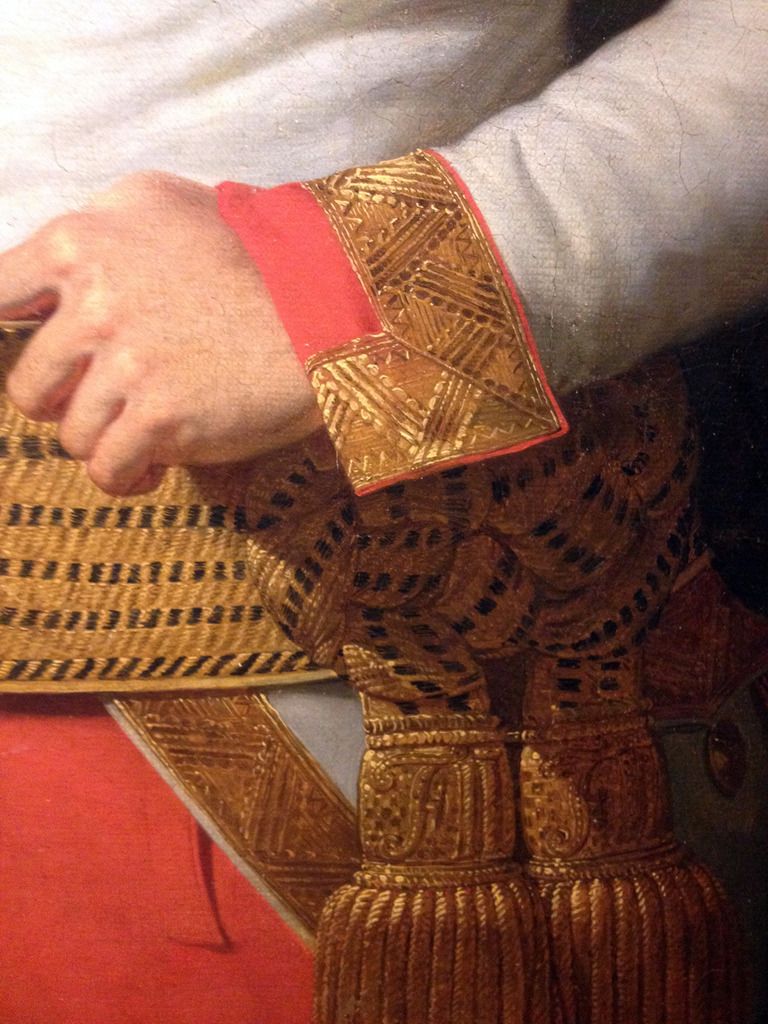
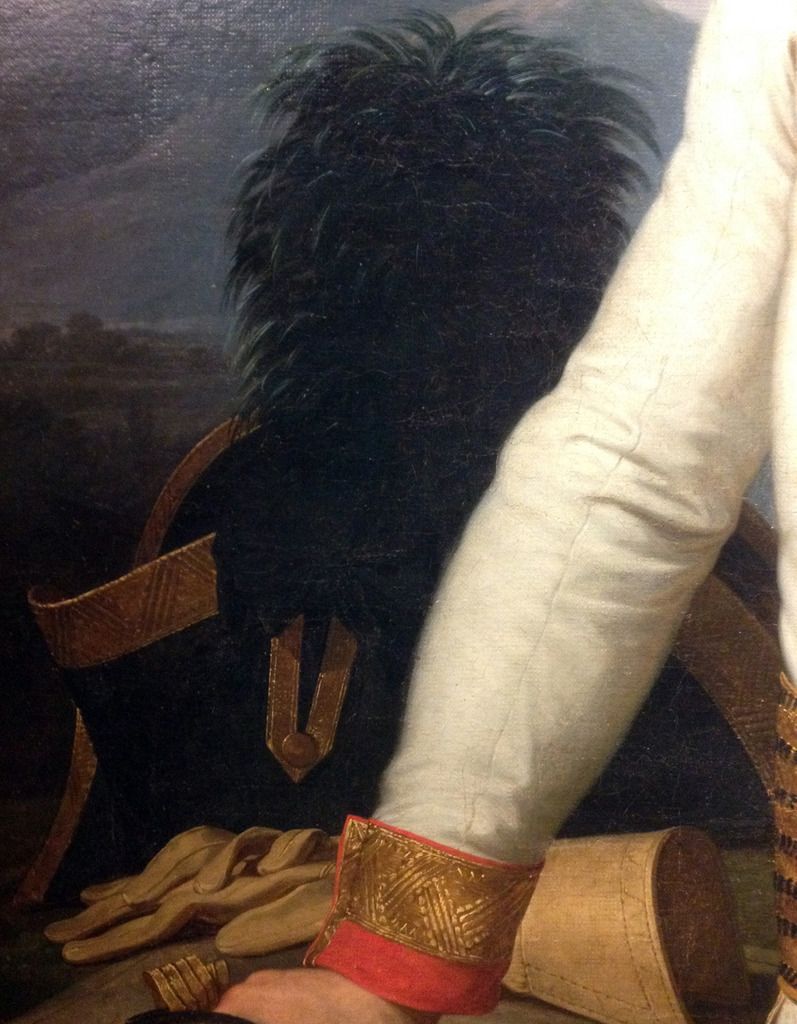
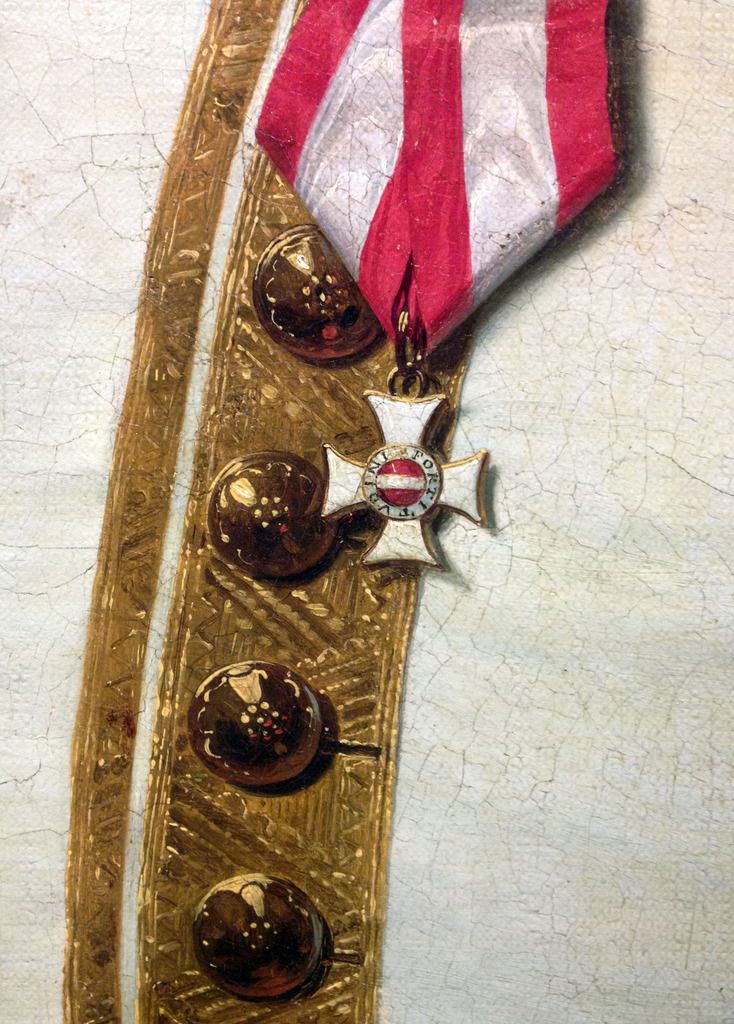
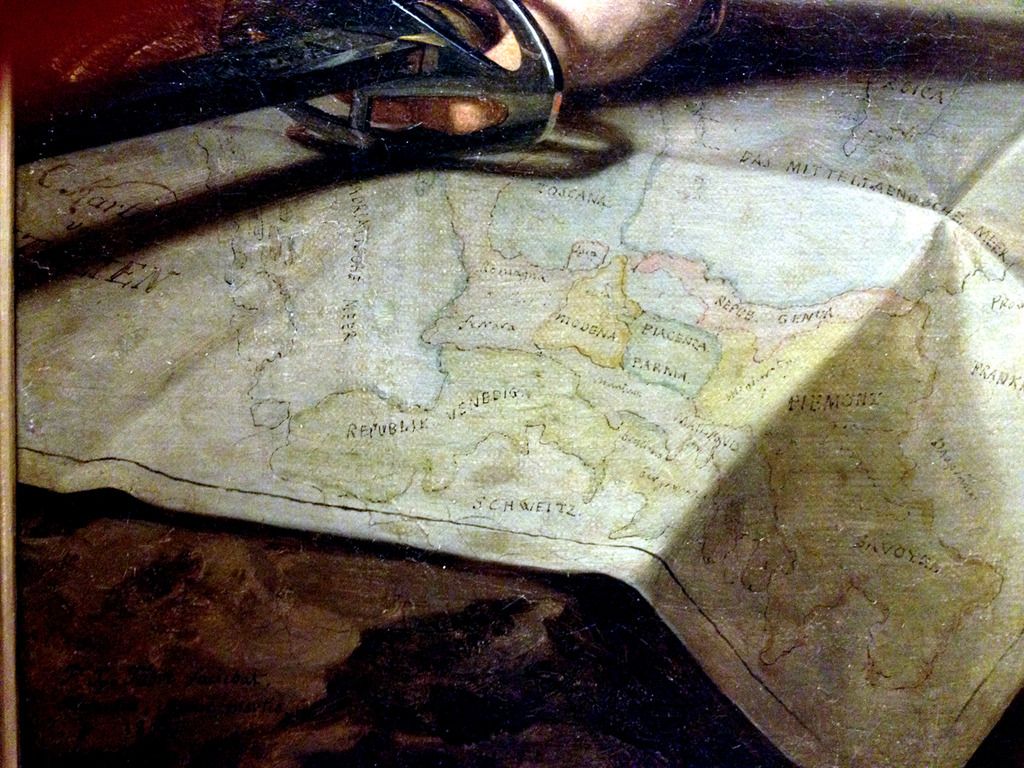
There are many interesting details on this painting, from the buttons down to the sash, that would never need to be considered for a 15mm figure, but these details are of interest to the uniform enthusiast, so I made sure I got some close up images...
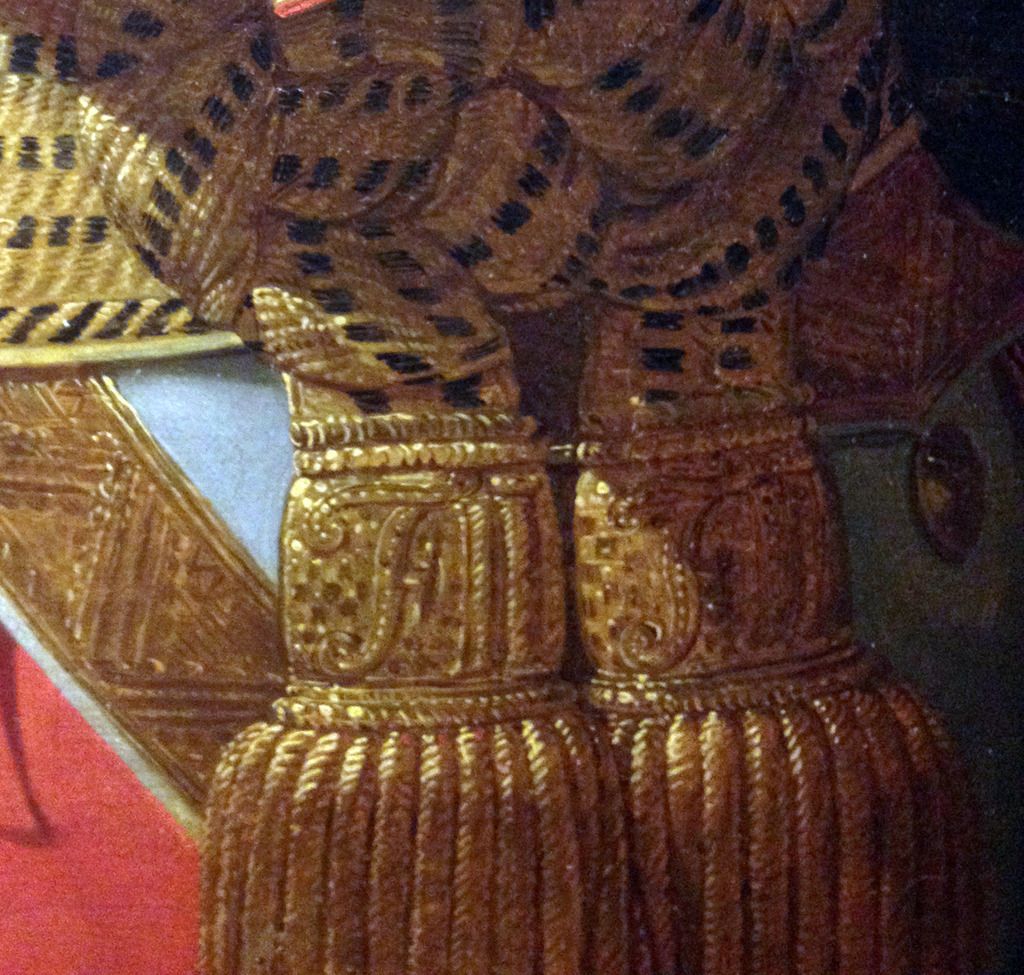
 

I also liked the detail on the map, which although is upside down, the artist has the names of the countries upright. Once you get your head around which way is north or south the map is very interesting...
 

Monday, 8 August 2016

Marengo Museum Part 2 - The Austrians

As the Austrian army was my favourite and the focus of this blog I was really looking forward to seeing a lot of new resource material or learning something I didn't know already when I visited the museum at Marengo. Anything at all that I hadn't seen before would be wonderful.

What I noticed though, was that the main focus of the exhibition was on the French, especially Napoleon.

Throughout the museum there were plenty of large panel artworks on display, most of which I had previously seen in Osprey publications. These included artwork by Christa Hook and Keith Rocco, and what appeared to be the originals by Richard Hook. All very cool to see, but nothing new.

 
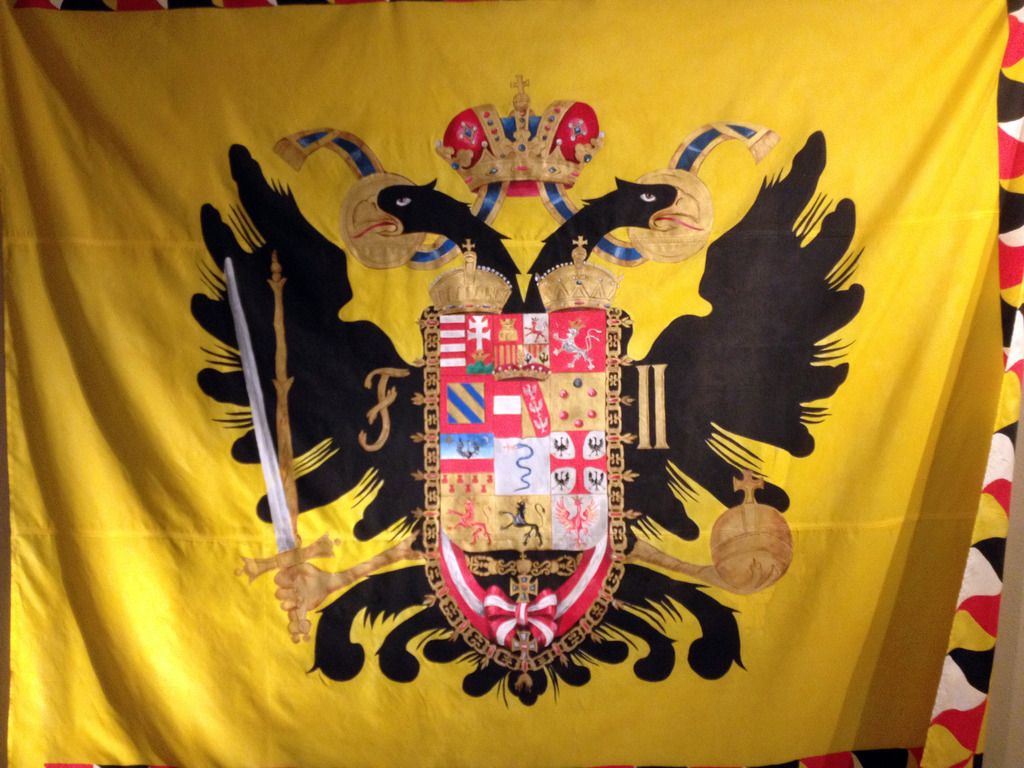
There was also a very nice reproduction flag. I was especially pleased at seeing this as I have been producing my own flags for my miniatures, all except the Austrians. I now have a good image to base my own artwork on so I can make my own flags. Not really a priority as these are easily available anyway.
 
 
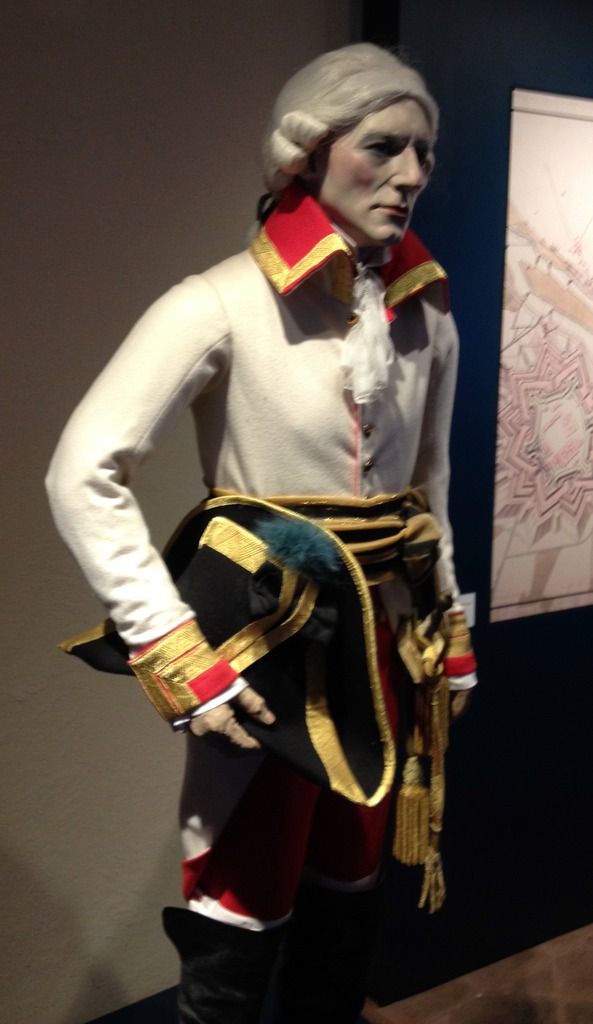
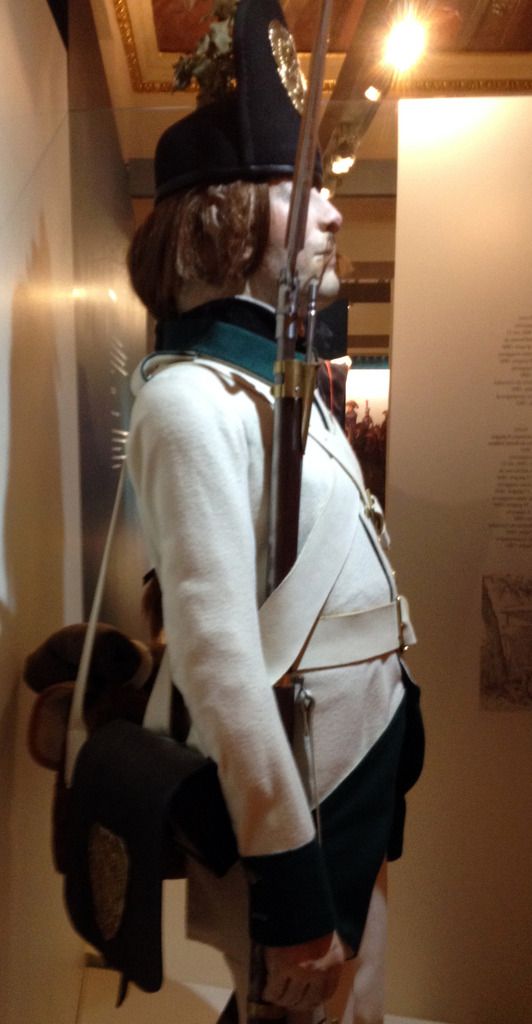
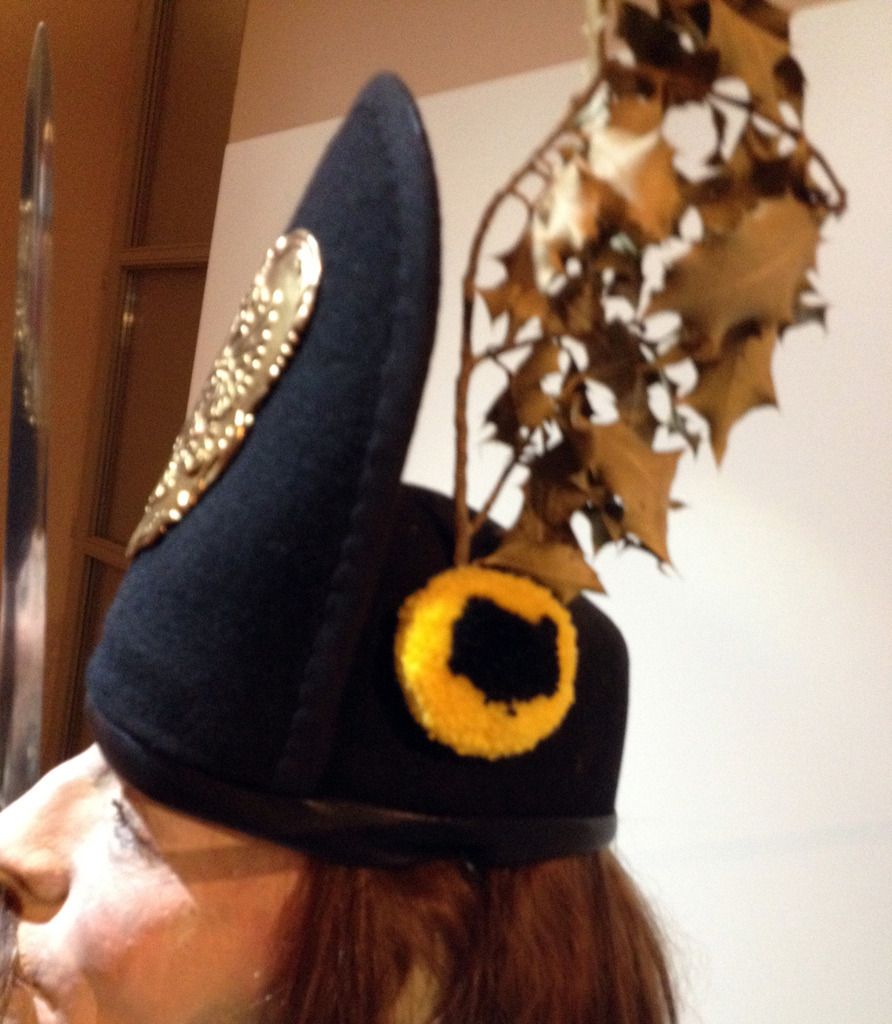
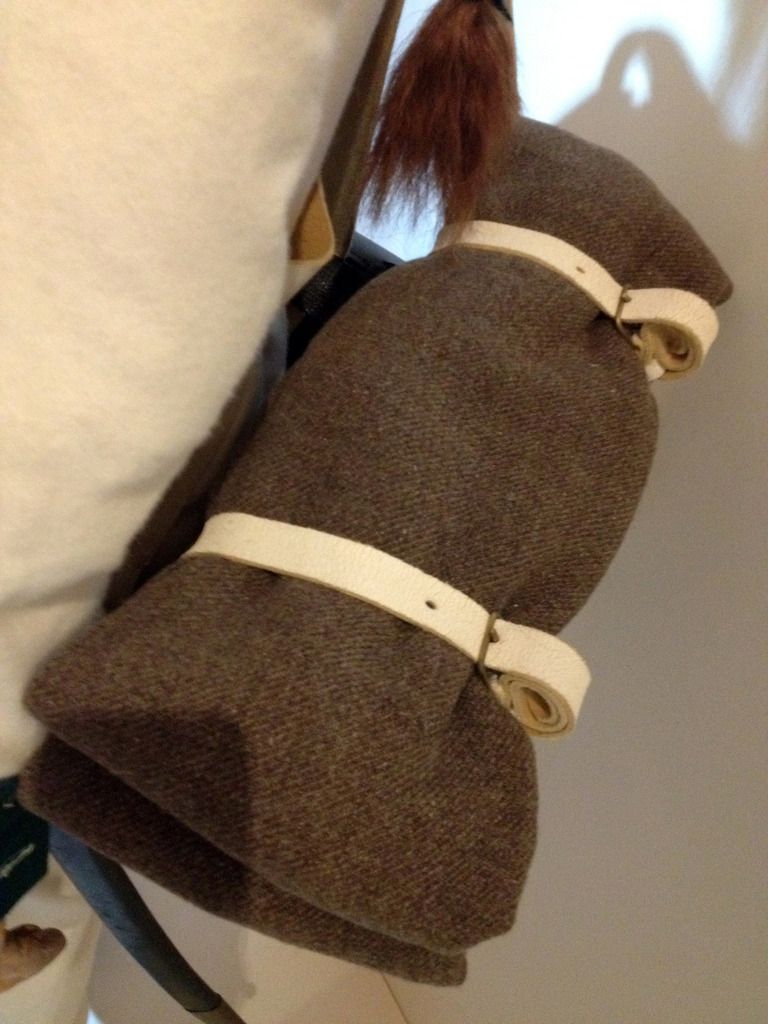
On to the uniforms on display. There are several life size figures throughout the museum, wearing replica uniforms that were created in 2010 (according to the signage). Some of these are more than a little creepy looking and look like Madame Tussuade waxwork failures - the Austrian soldier's moustache looked really bad.
 
The first model was of an Austrian General officer. I didn't get many pictures of this guy, and most were blurry. My son had decided to run on ahead and I had to keep an eye on him. I don't think there was too much missed though.
 
 
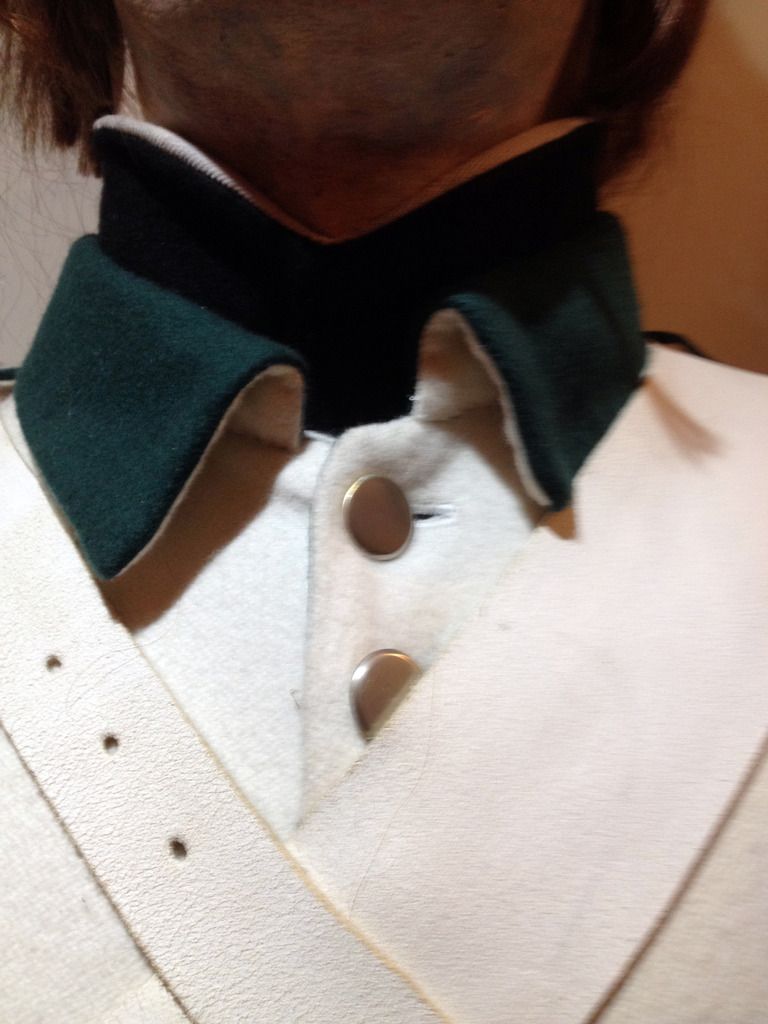
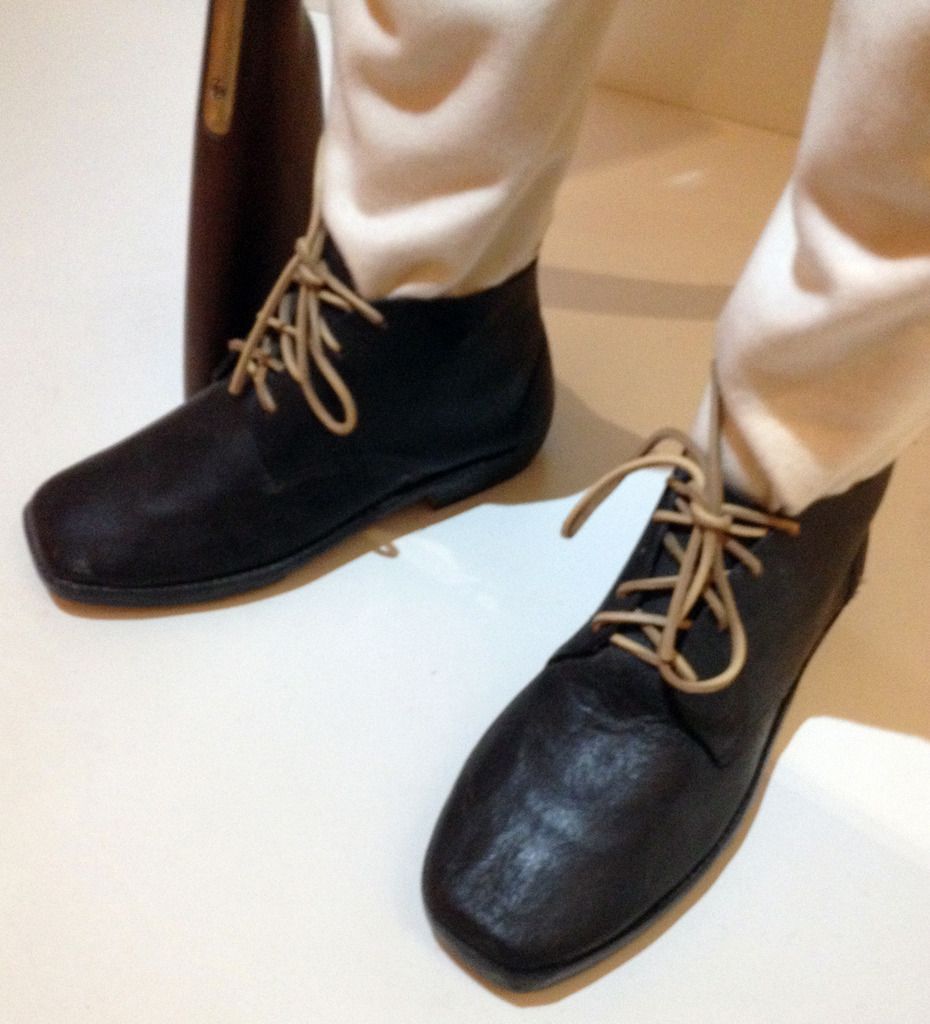
The next was an Austrian Line Infantry in German uniform, possibly IR47 Kinsky. This was the guy with the creepy moustache and "dead" eyes. The uniform looked correct to my eyes, though there were a few details that I found myself questioning at second look. Is that casquet correct? What's going on with his trousers? I would have expected gaiters, or the trousers to be Hungarian if there were no gaiters.


And that was it for the Austrians. There was a lot of text on the walls, but as it was in Italian I have no idea if I missed anything important. So, slightly disappointed, but only because I was expecting a lot. Next I'll look at some French.
 

Monday, 8 February 2016

15/18mm French Revolutionary Infantry Comparison - Part 2

I posted a few comparisons on my blog in the past and they have all been very popular, so after doing one of Revolutionary and early Napoleonic era French, I thought I'd give you an other quick side-by-side comparison of some command bases.


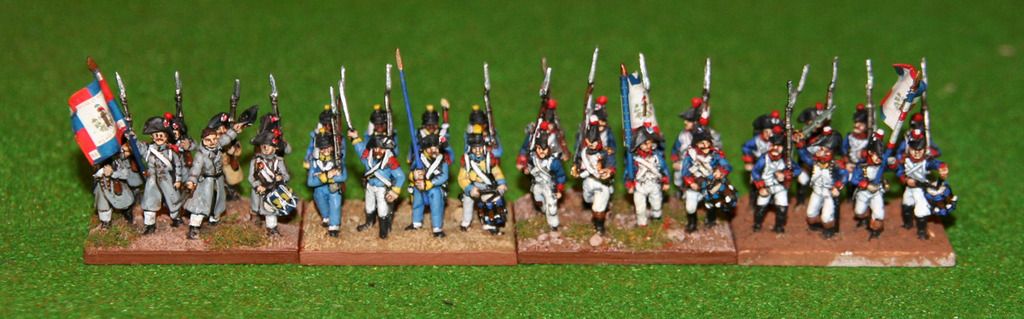
This image consists of, from left to right...
1. AB French Line in greatcoats with Blue Moon also in greatcoats. These mix reasonably well. I would have used Blue Moon command figures but they came with an eagle whereas the AB had a standard flag pole. Blue Moon are nice models but the have very short bayonets compared to other brands.

2. French Legere in Egypt from Fighting 15s, previously Black Hat.

3. Demi-brigade using Warmodelling, previously Fantassin and now Capitan or Battle Models. Its hard to keep up with what this range is called. These are nice and mix really well with AB, but they are suffering from some poor casting. This is supposed to be getting sorted but I'd check before ordering.

4. These are the newest entry for this period and are from Campaign Games Miniatures in Spain. These are lovely figures and paint up really nice. There is a choice of two command sets and you can have the grenadiers in bicorne or bearskin. The standard bearer comes with separate flag pole or eagle, so you can use these as later as well.

Hopefully this will be as useful as the previous comparison posts.

Wednesday, 26 August 2015

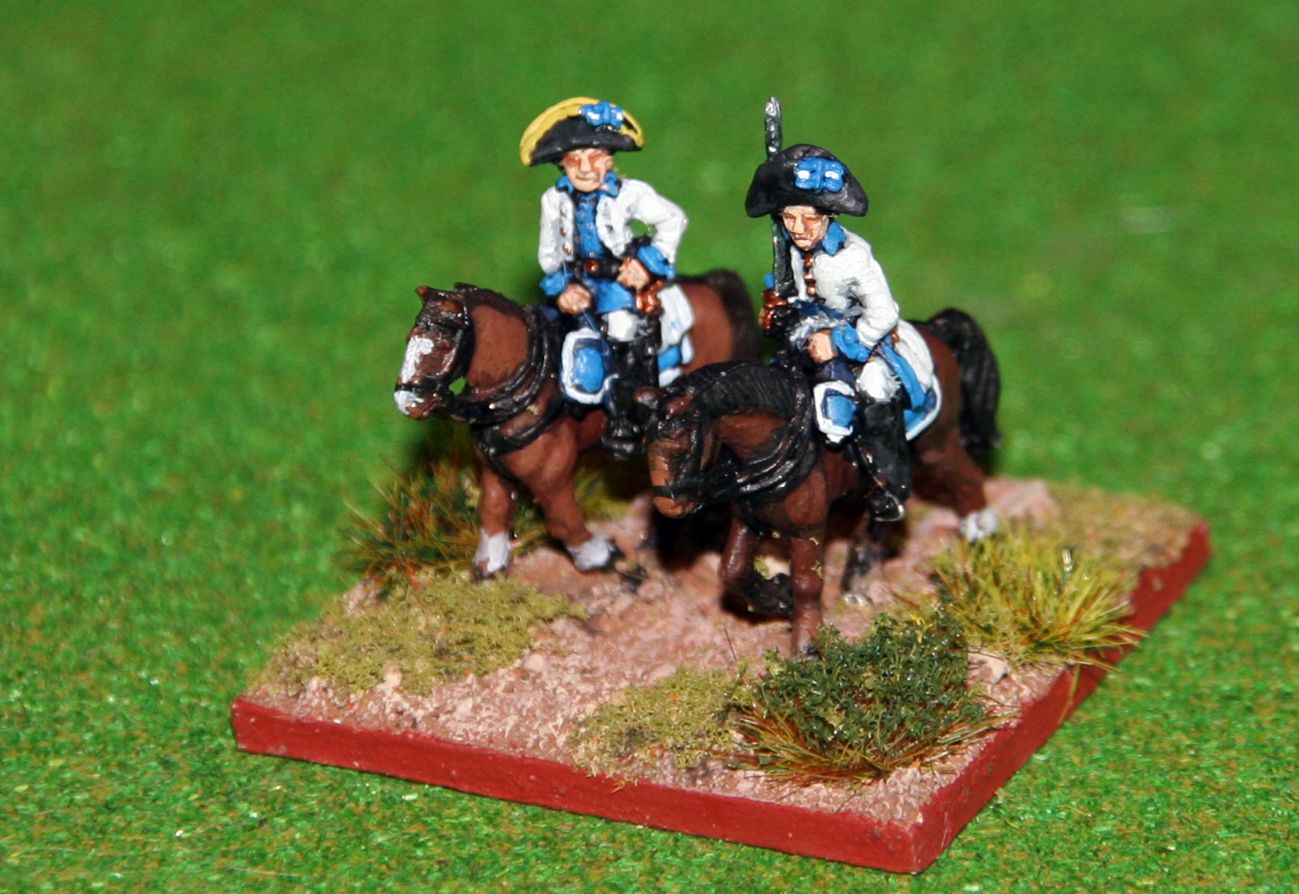
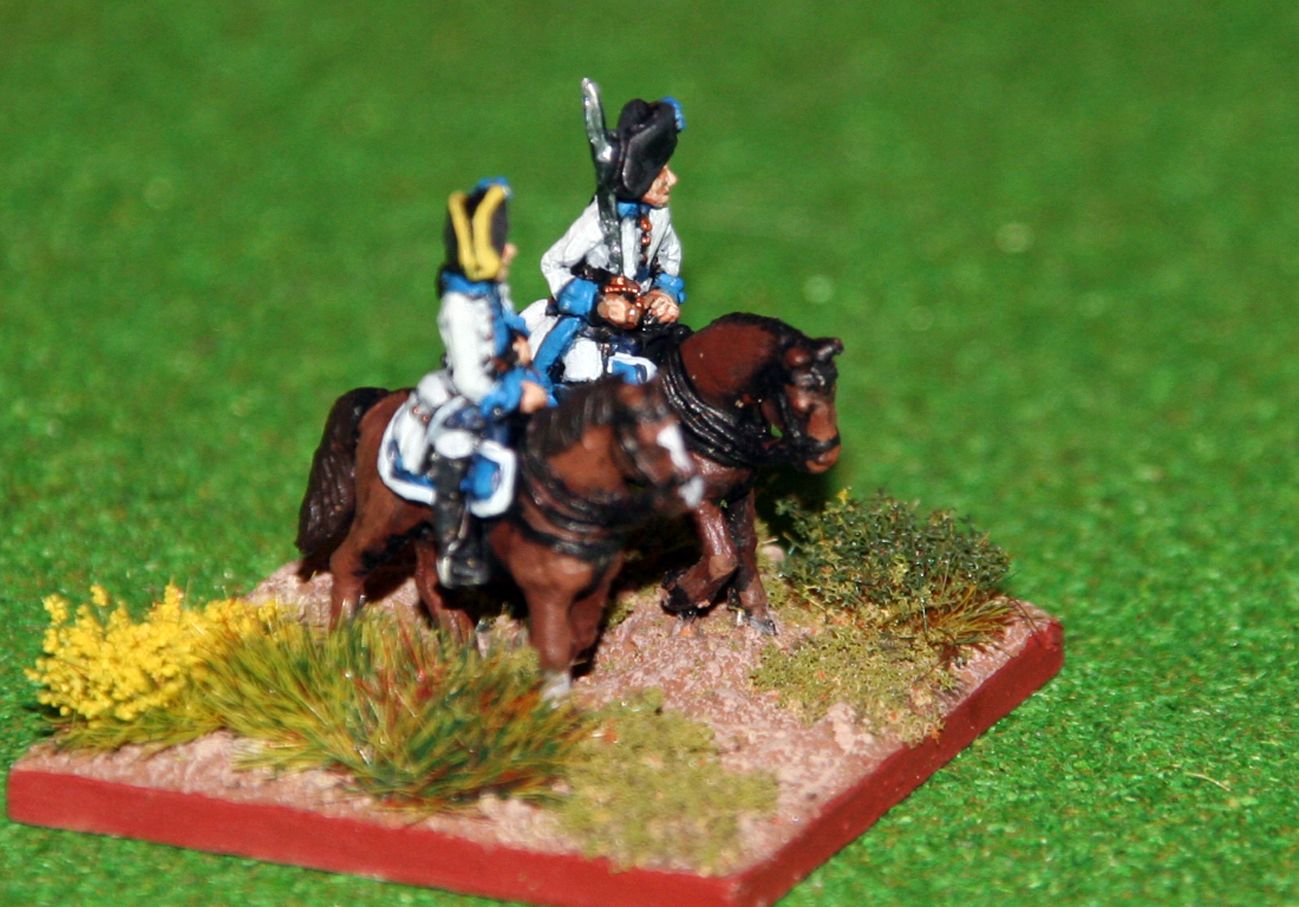
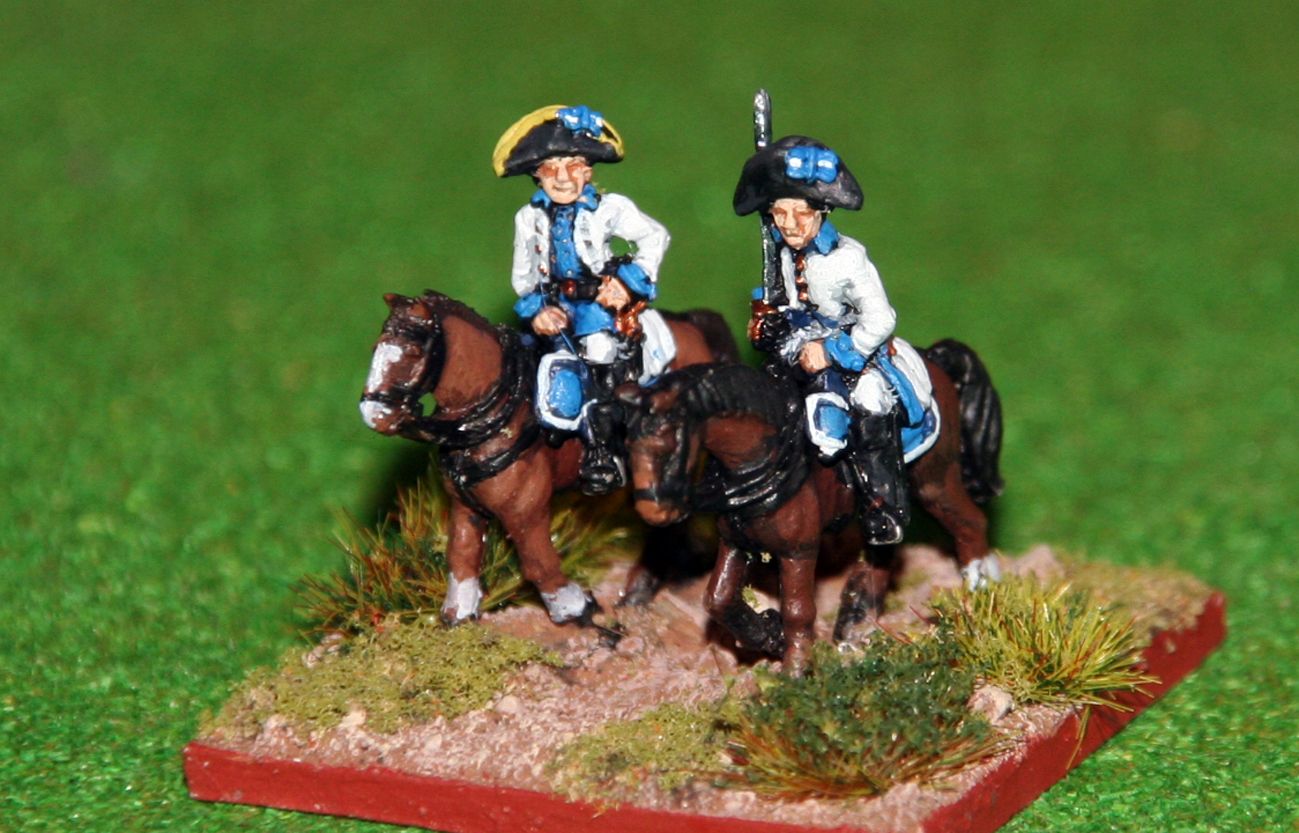
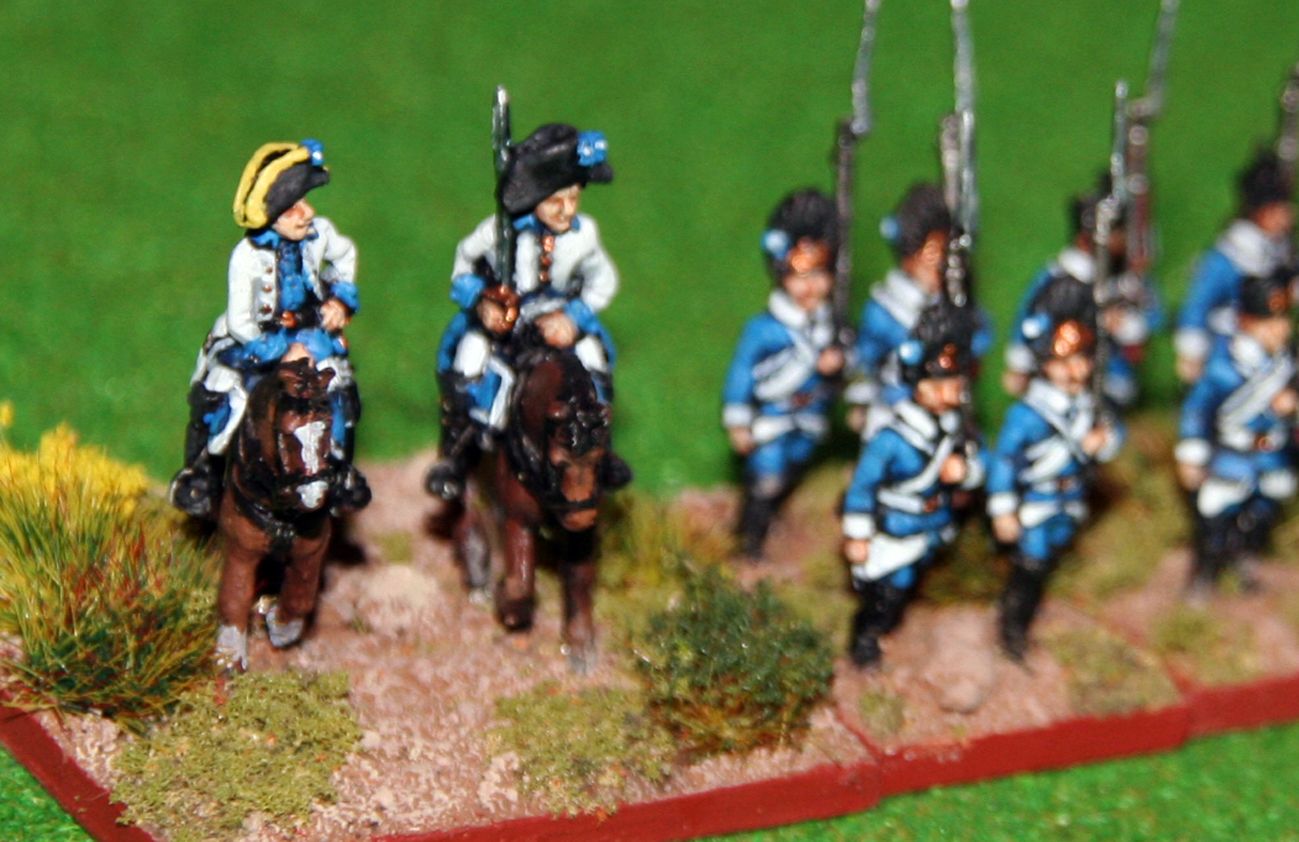
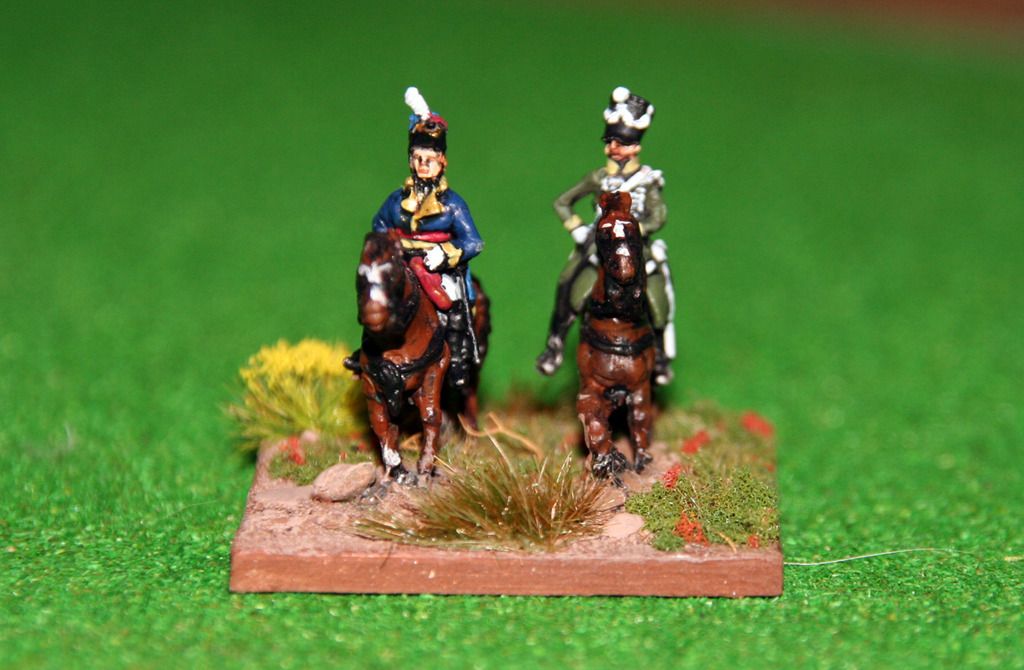
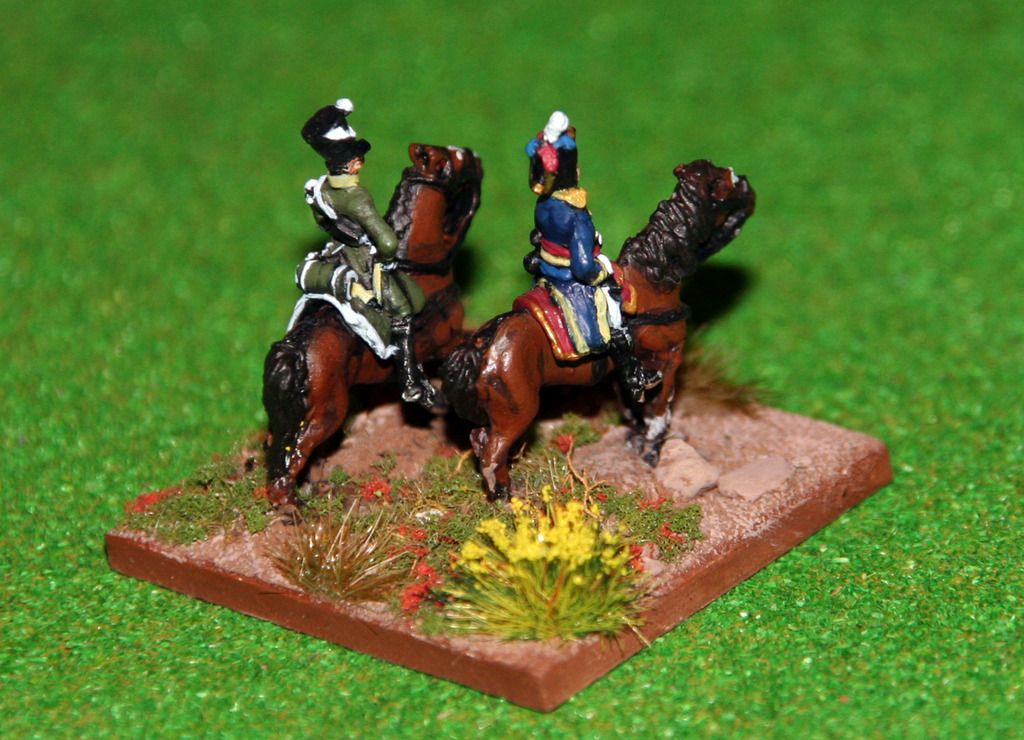
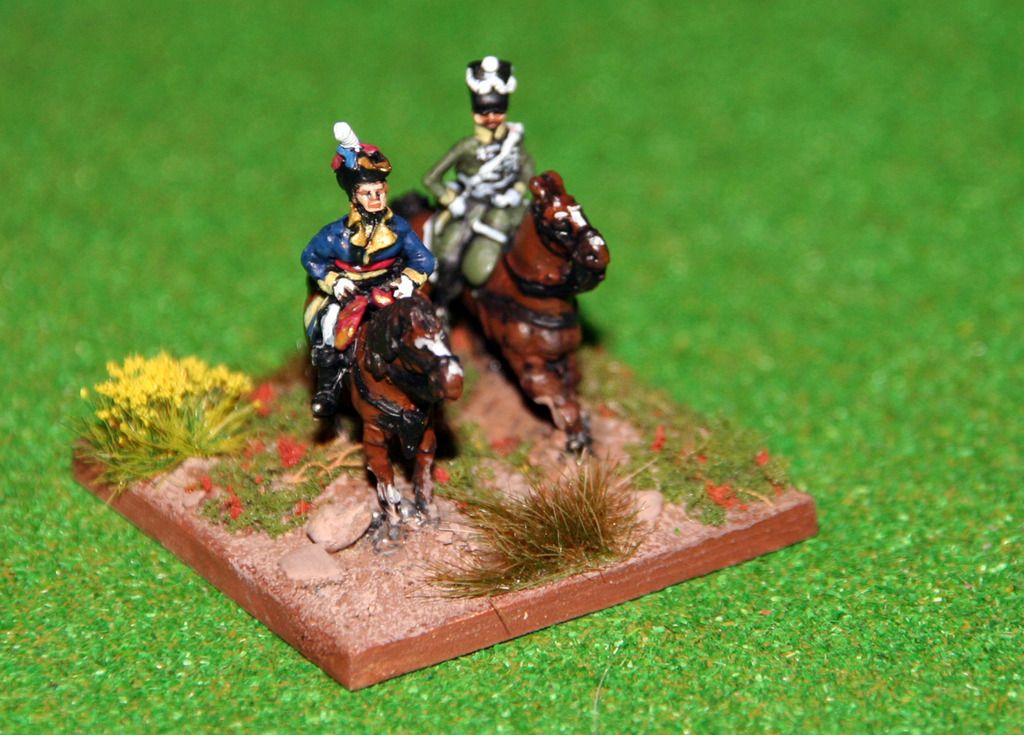
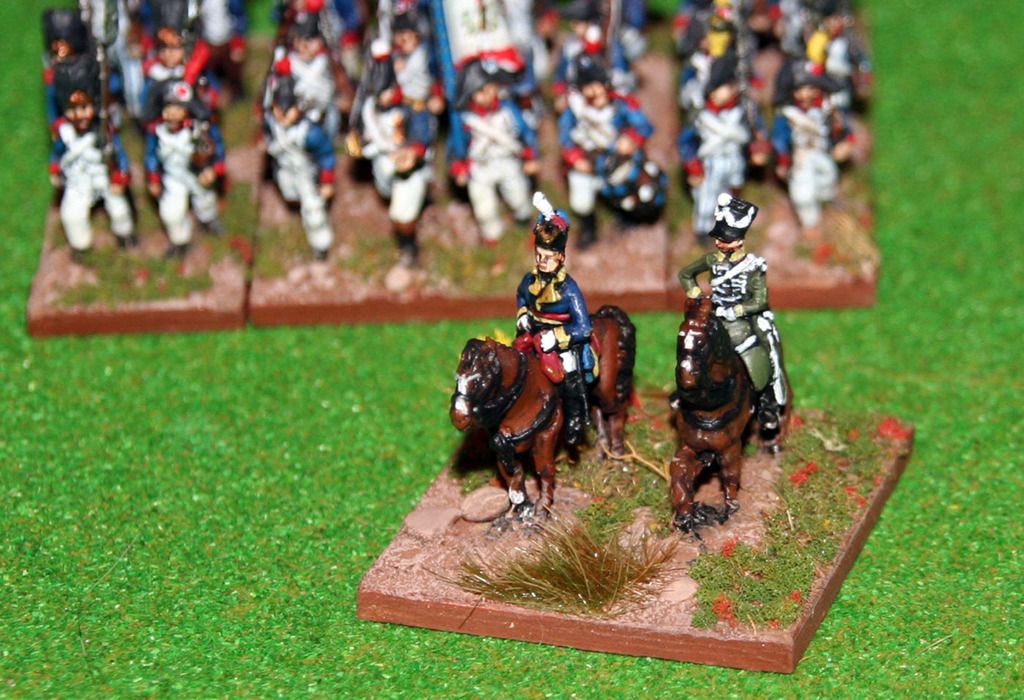
Venetian Mounted Officers/Generals using Boki 18mm Miniatures

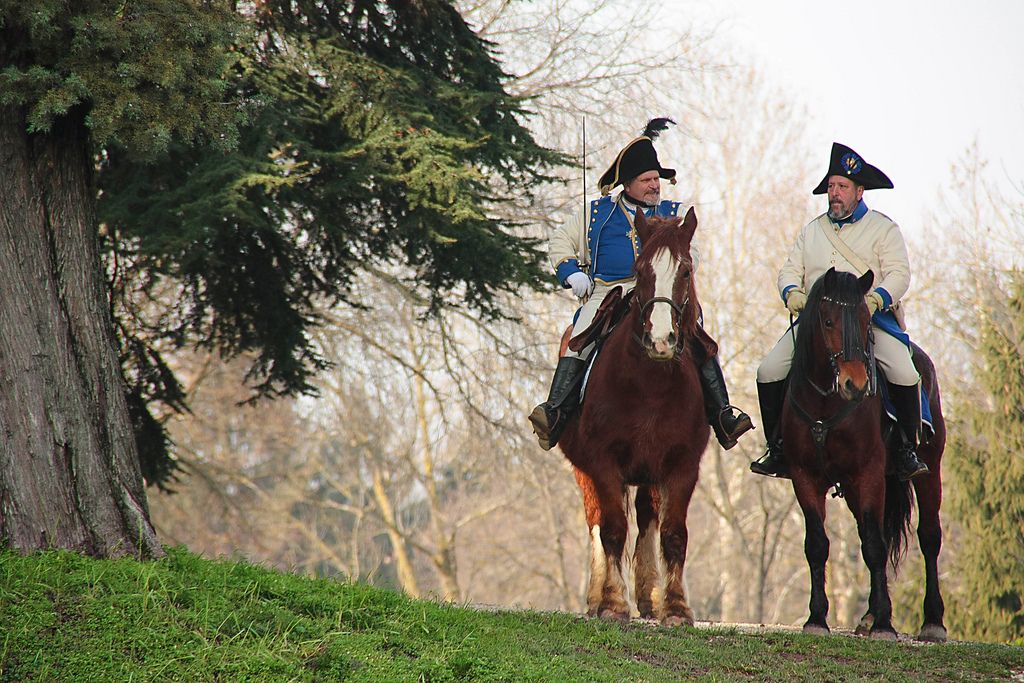
While researching the Venetian army in the Napoleonic era I discovered more images of re-enactors than I did of actual historical uniform reference. I decided to build my army based on these interpretations of their uniforms until such time as I can confirm any actual uniform details.

I'm using Austrian miniatures as a basis for the Venetians, although there are many minor differences. Hopefully at 15/18mm scale these won't be noticeable.

One of my favourite images of the re-enactors was this atmospheric picture.


This inspired me to do a command base using Boki miniatures fantastic new Austrian Line Officers to represent these two guys. The figures are not a perfect match, but they are close enough for me.

Thursday, 12 March 2015

Les Carabiniers Cassique - Republican General

I've not had much chance of getting much painting done over the last few weeks, now that I have a new graphic design job, but I did manage to finish off this general from the Les Carabiniers Cassigue range.

The pack consisted of two generals (one with a flag pole), a figure wearing a shako and another wearing a bearskin.

The two figures on this base are probably the most useful of the pack - I'm not sure what use I'll have of a general carrying a flag - excepting a Napoleon at Arcola of course.

I also wasn't sure as to what the figure wearing the shako should be, but it looked like a chasseur of some sort. I couldn't find any reference, so I just used guesswork and went with a chasseur uniformed Aide-de-camp. Hopefully it looks right, even if its not...
Tuesday, 30 December 2014

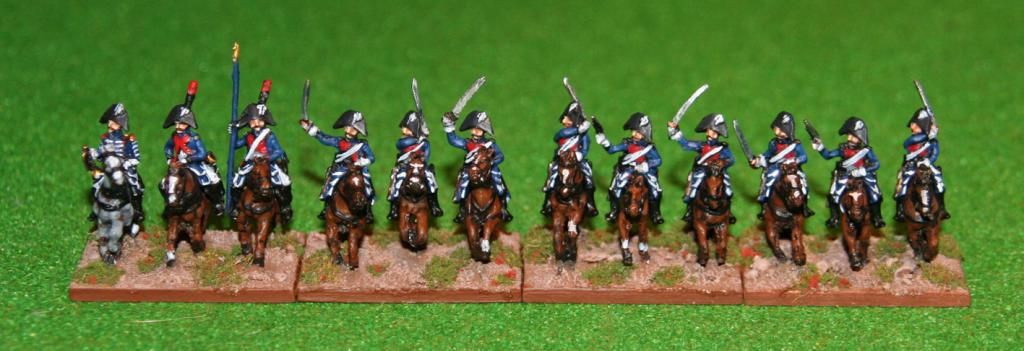
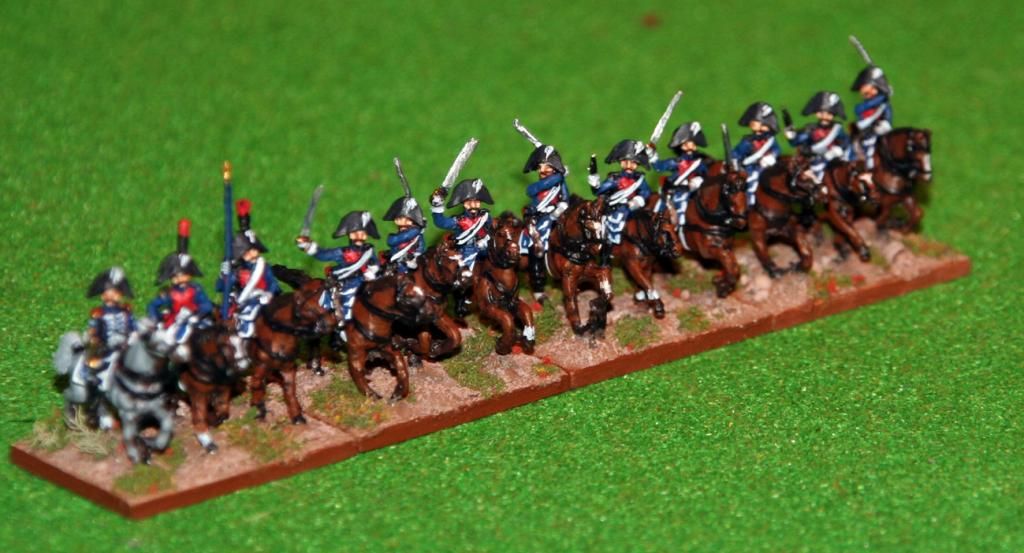
Kellerman and the 2nd Heavy Cavalry

Francois Etienne de Kellerman was noted for his daring and skillful exploits during the Napoleonic Wars. He was born in Metz and served for a short time in his father's regiment of Hussars until 1791 and returned to the army in 1793 where he again served under his father's command in the Alps, and in 1796 he rose to the rank of chef de brigade.


In the latter part of Bonaparte's 1796-97 Italian campaign he attracted the future emperor's attention at Tagliamento. He was made general of brigade and continued in Italy in the armies of Rome and Naples under Macdonald and Championnet.
At the Marengo he commanded a heavy cavalry brigade with which he conducted one of the most famous cavalry charges of history, which, with Desaix's infantry attack, decided the issue of the battle defeating three Austrian grenadier battalions. Then rapidly reforming his troopers, charged and routed an Austrian dragoon regiment. The dragoons stampeded through the Austrian army, causing a general rout that effectively ended the Austrian's battle.


Kellerman's Brigade

2e Heavy Cavalry               12 Figures.    Grade: Line 
20e Heavy Cavalry             12 Figures.    Grade: Line
21e Heavy Cavalry             12 Figures.    Grade: Line

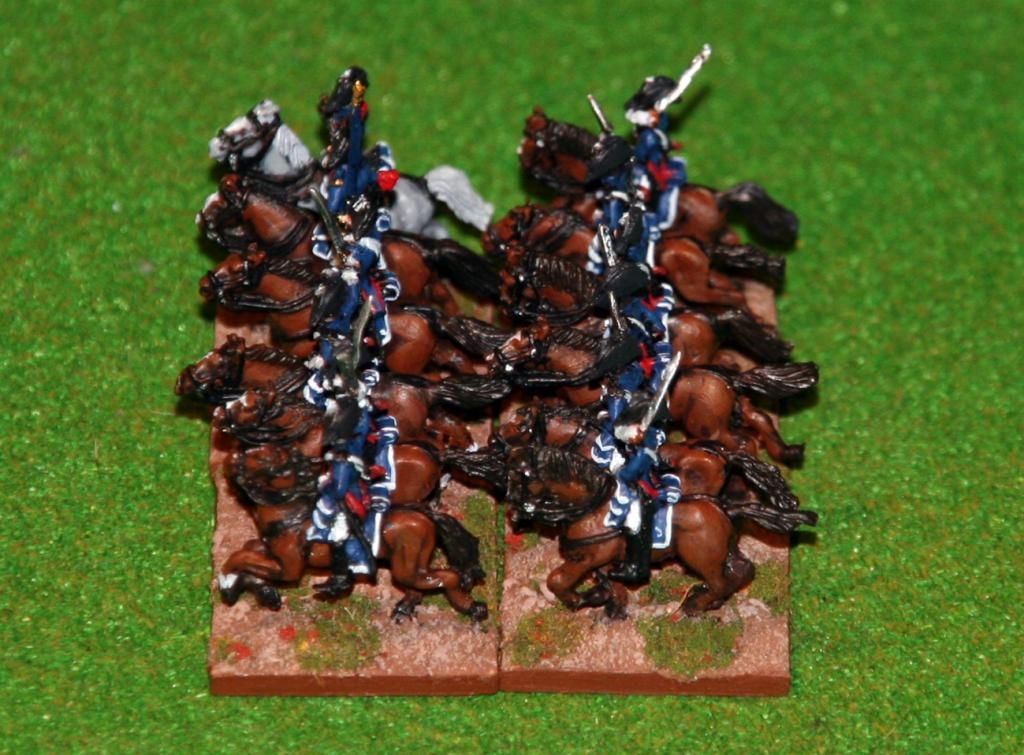
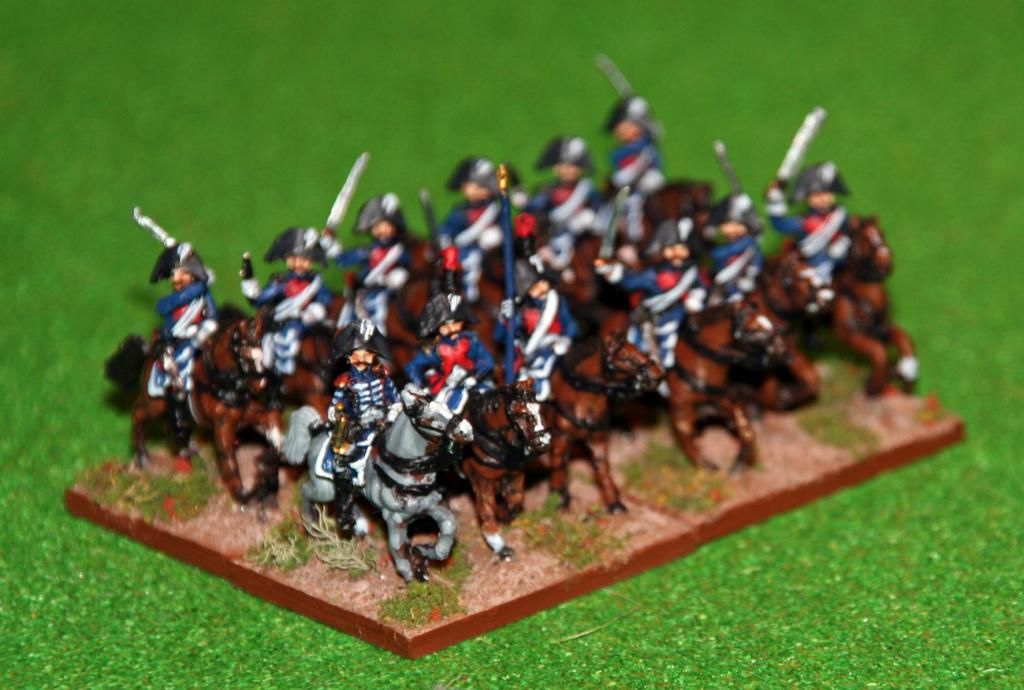
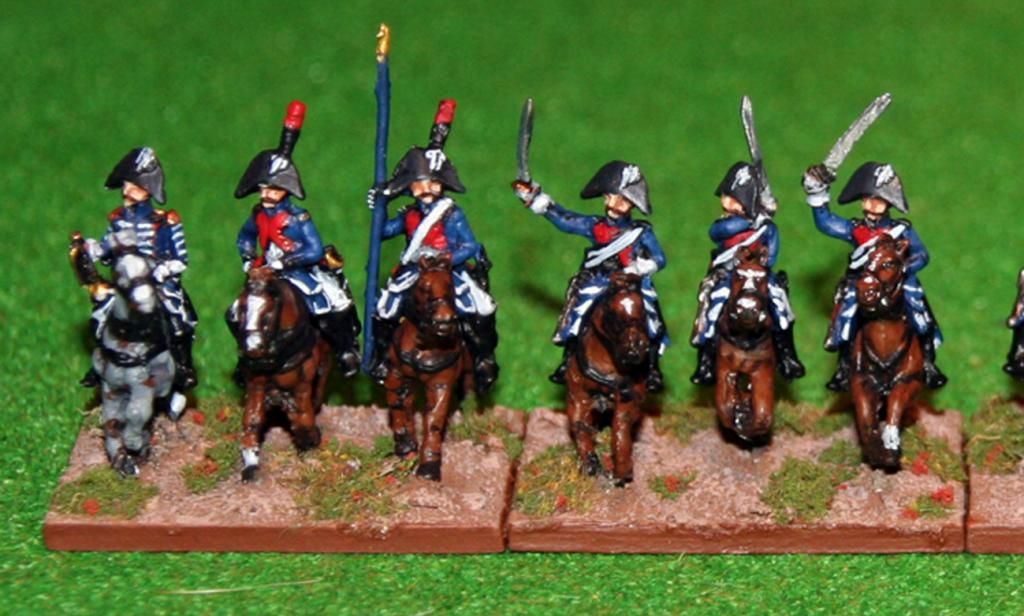
The 2nd Heavy Cavalry

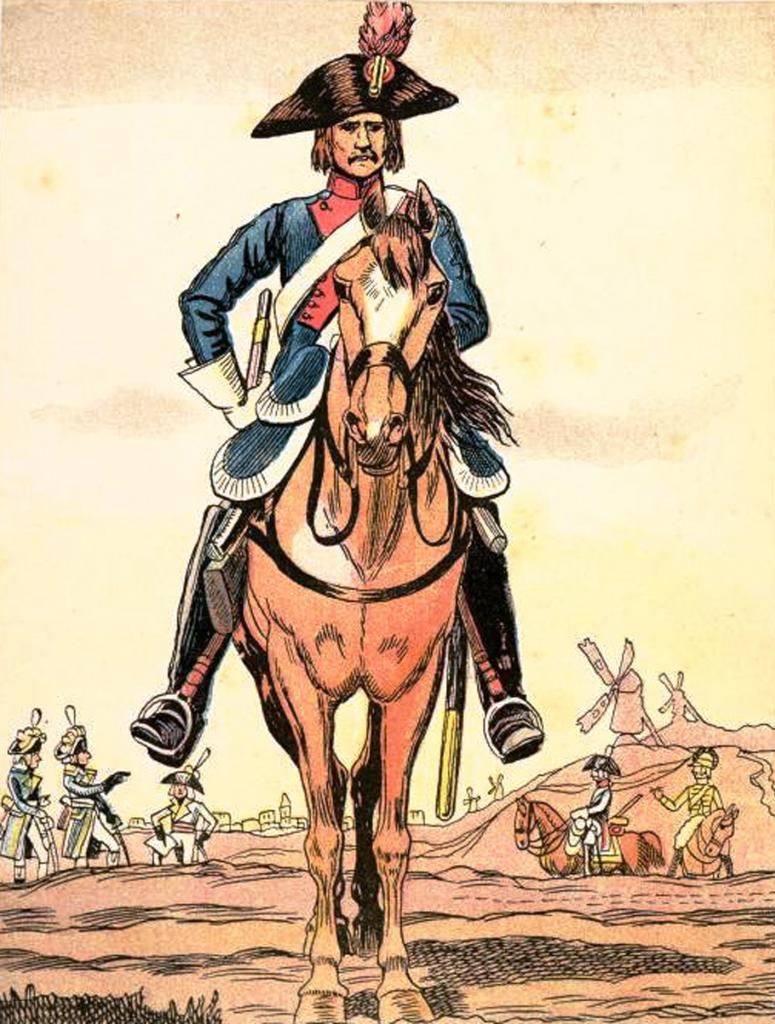
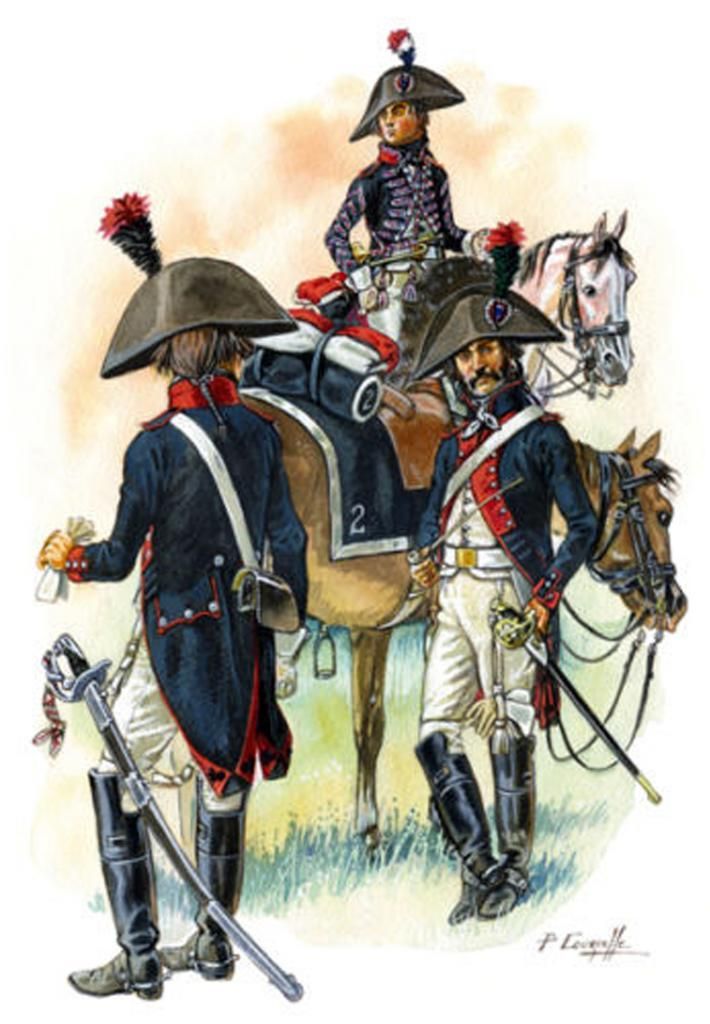
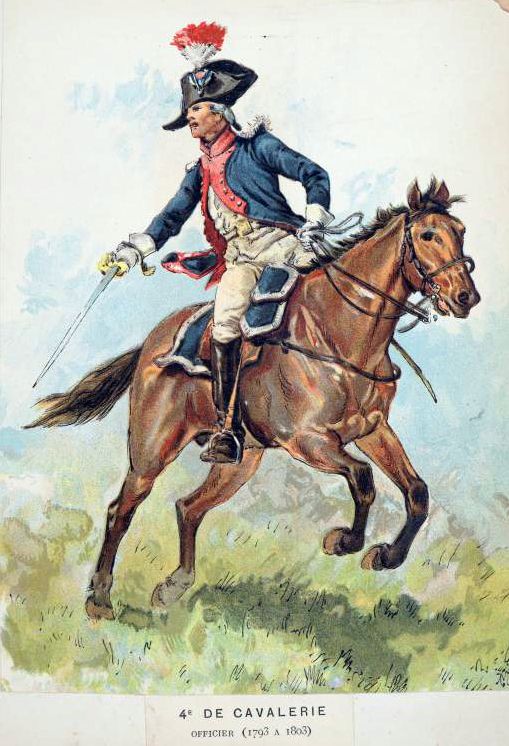
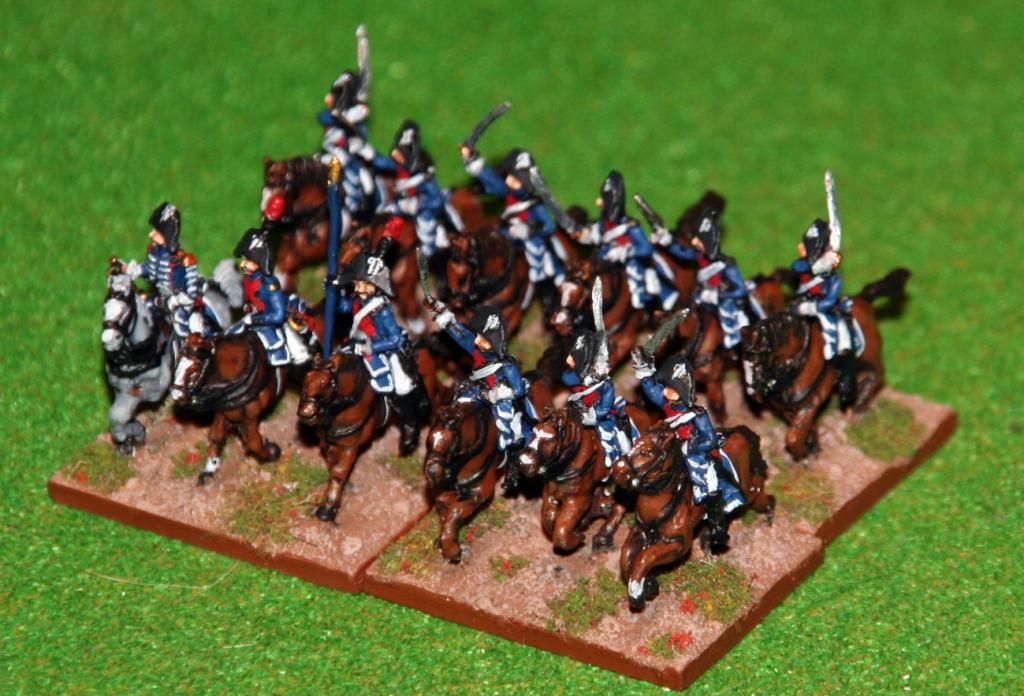
Putting together a unit of French Heavy Cavalry for Marengo was not as easy as I first thought. There is a very limited choice of figures with virtually none available that I felt would fit in with what I already had. Plus with cost constraints meaning I had limited funds to spend. First of all I had to do a little research on what the Heavy Cavalry looked like at this battle. There were a few contradictory images online and in book reference, but here are some that I used as reference for painting this unit.


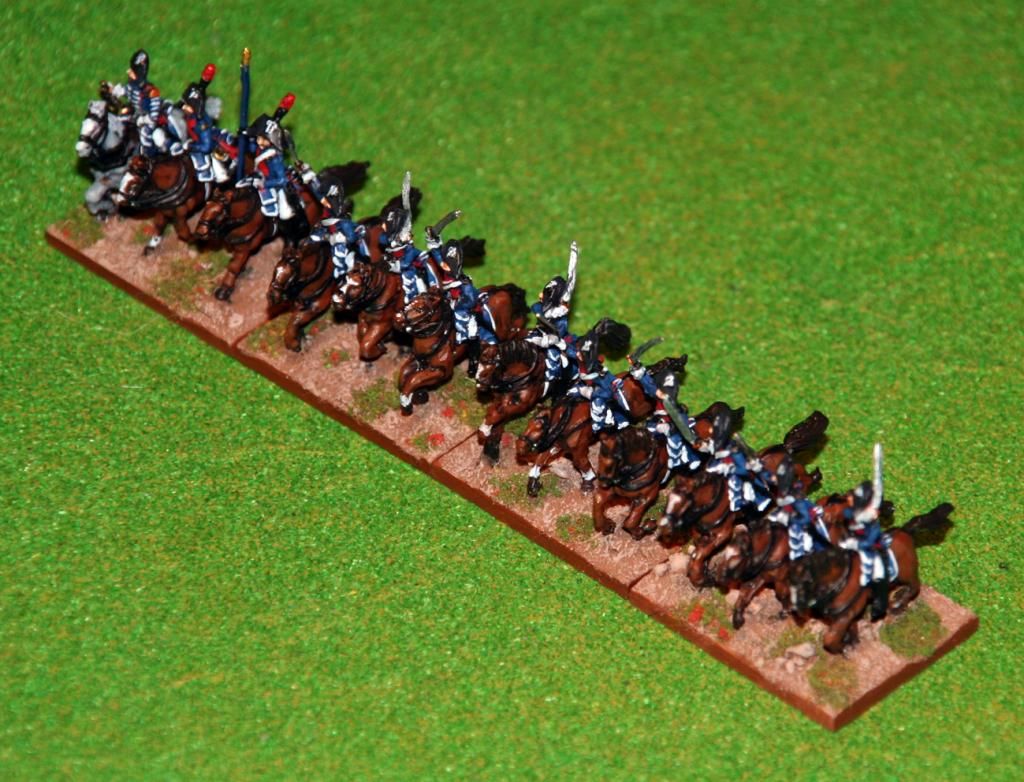
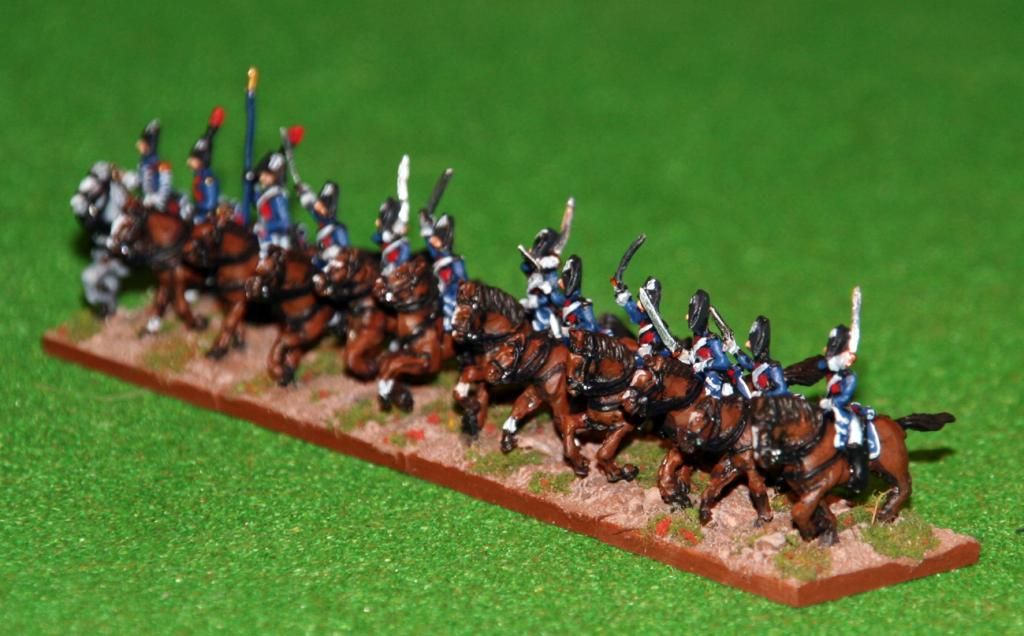
As I really want to concentrate on my Austrian army I didn't want to spend too much time and money on these, but I also wanted something that would be of similar quality to my other units. I had a few suggestions from the TMP Napoleonic forum which included using Spanish troops as my French, and with a lot of help from Mike at Warmodelling UK, I have managed to put together two units of twelve cavalrymen each using their Spanish Cavalry range, all at a very cheap price. Unfortunately Mike is no longer supplying Warmodelling miniatures so the next and final unit will have to be ordered from Spain.

The figures themselves are reasonably good, but with the slight roughness that lower the quality of Warmodelling's figures, and some of the horses didn't look like they were from the same sculptor. Also a couple of the figures are holding pistols (I may change these if I can get more sword-bearing spares).

I've painted these a little quicker than they deserve, but with increasing arthritis pain in my hands, and decreasing eye-sight quality, they were a bit of a struggle. I also hate painting horses for some reason, and this is probably the very first mounted unit I've completed.

The flags still need to be done, with new artwork needed, and then a visit to the printers.

I hope you like them. And comments as to whether these work as Heavy French Cavalry or not are welcome...


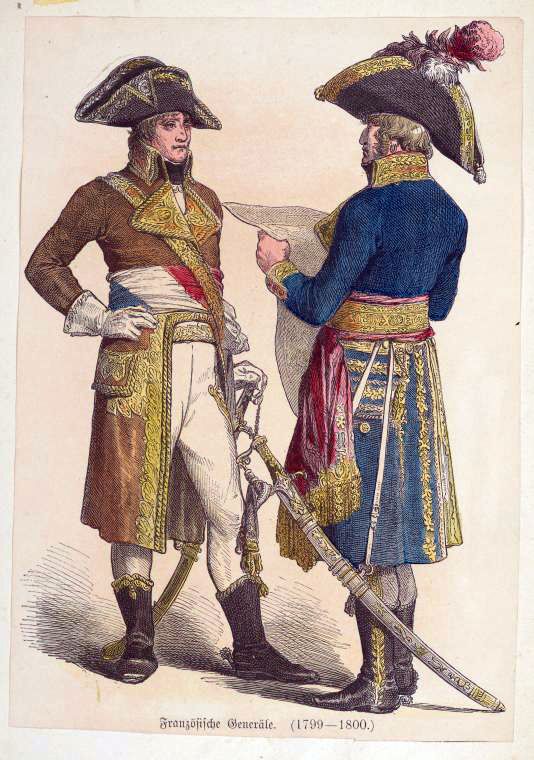
I also found this very nice image of French Generals suitable for this period...


Friday, 21 November 2014

15/18mm Napoleonic Comparisons - Generals part 2

While painting some of the new Blue Moon Austrian Generals I thought I could do a bit more browsing on the internet for inspiration, and I found some very nice pictures.

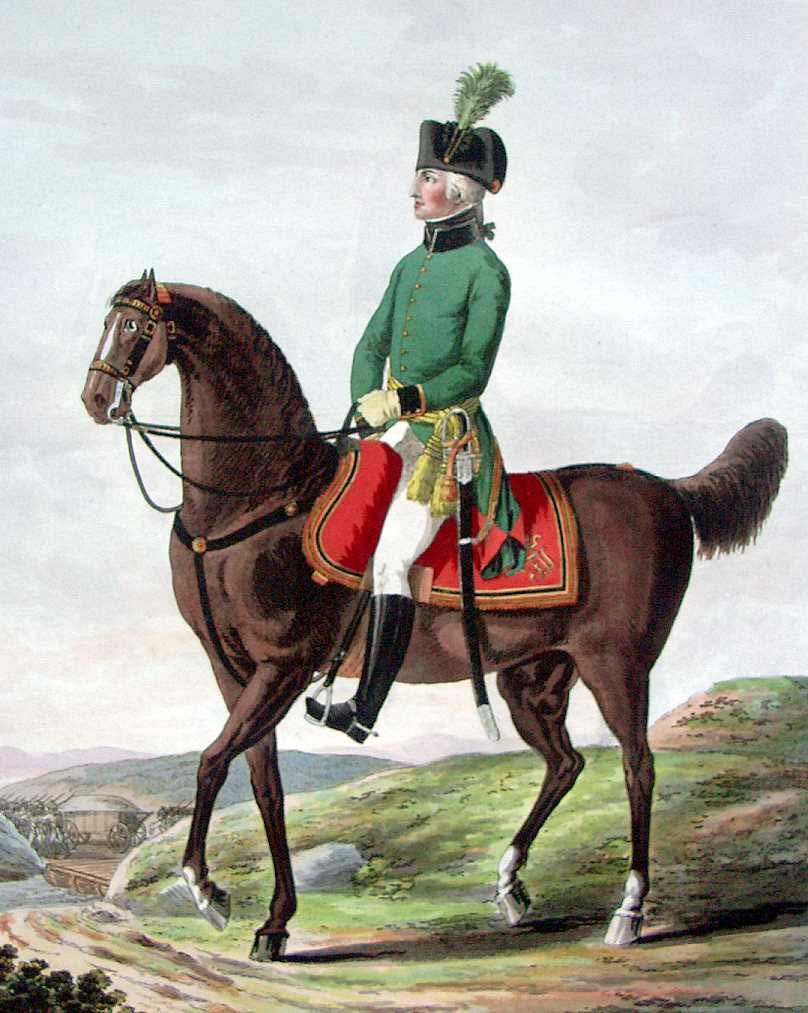
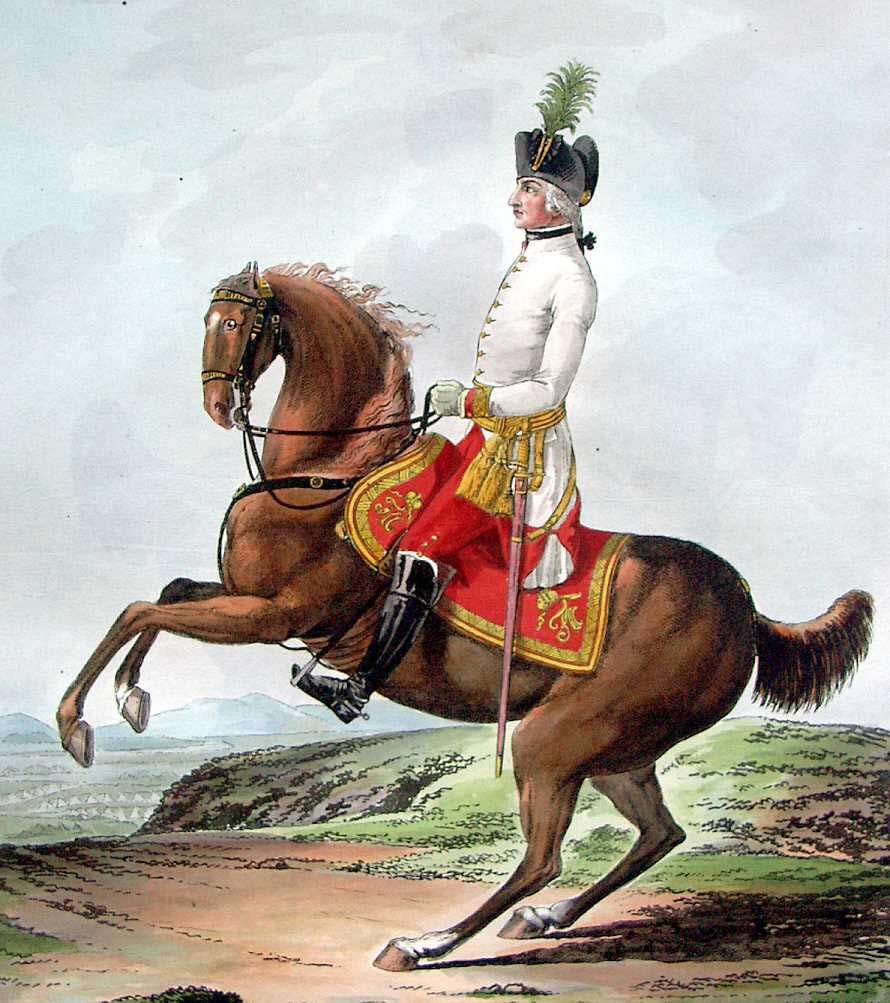
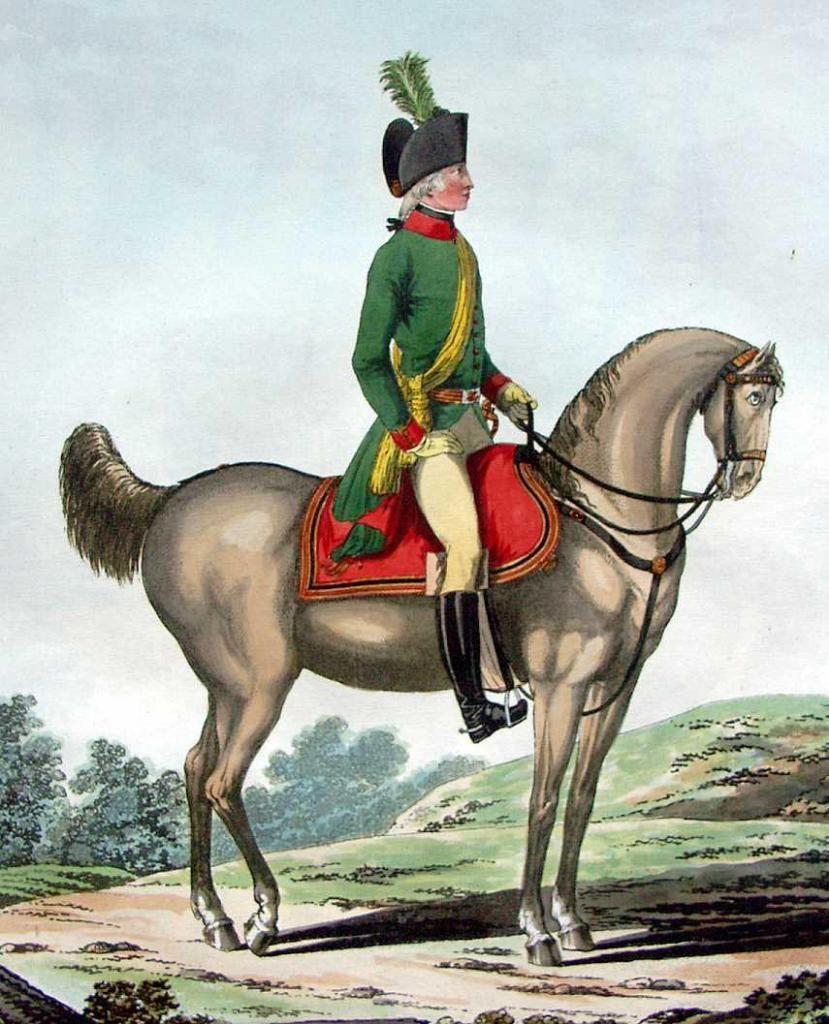
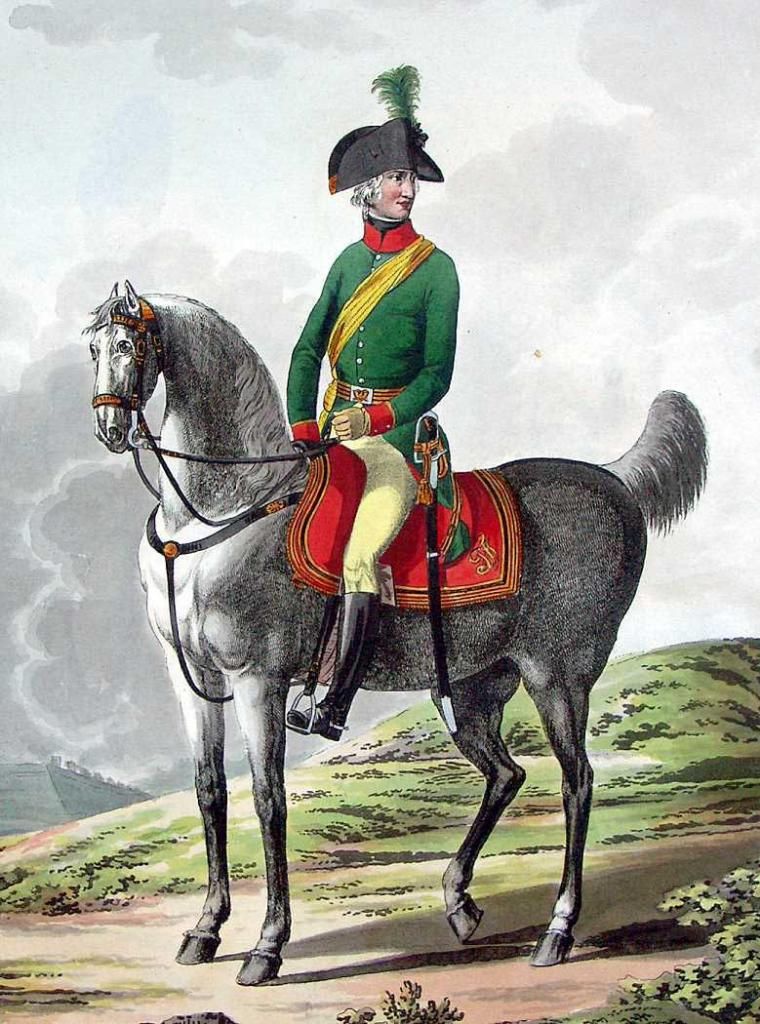
These were my favourites, from (I think) the Mollo Collection. I particularly liked the aides, so on my first Blue Moon base I painted the figures as these.

General


General Adjutant


Aide


Staff Officer of the Quartermaster-General's Staff


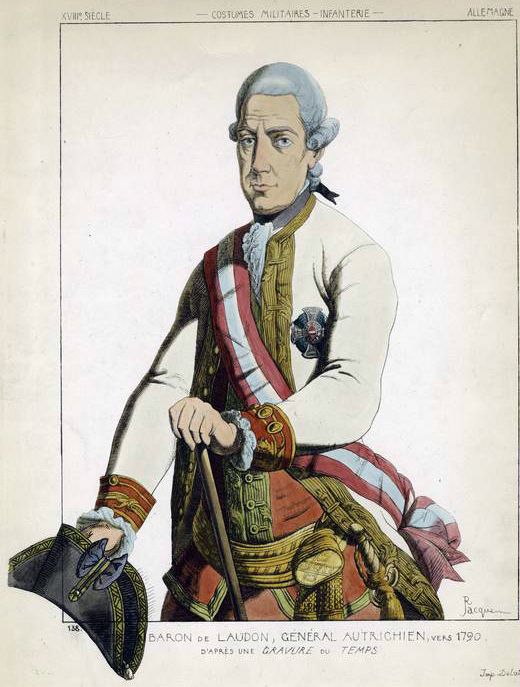
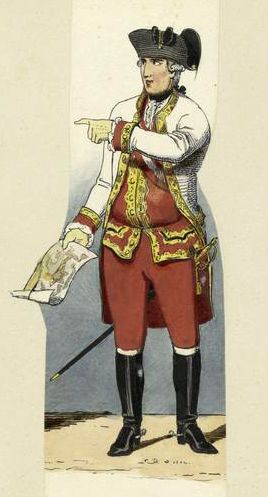
I also found these two images, that although they were possibly earlier than 1800, they are quite good reference pictures.
 
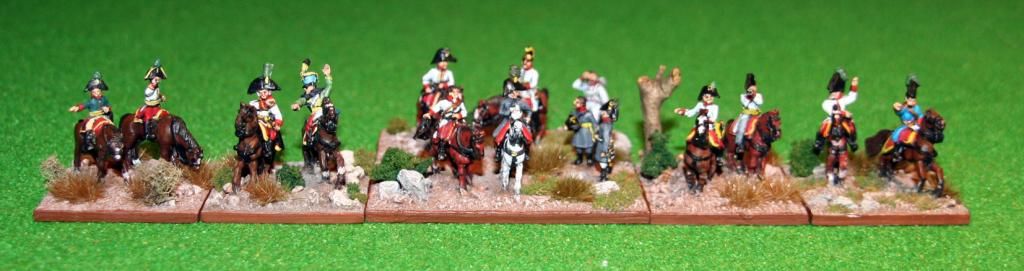
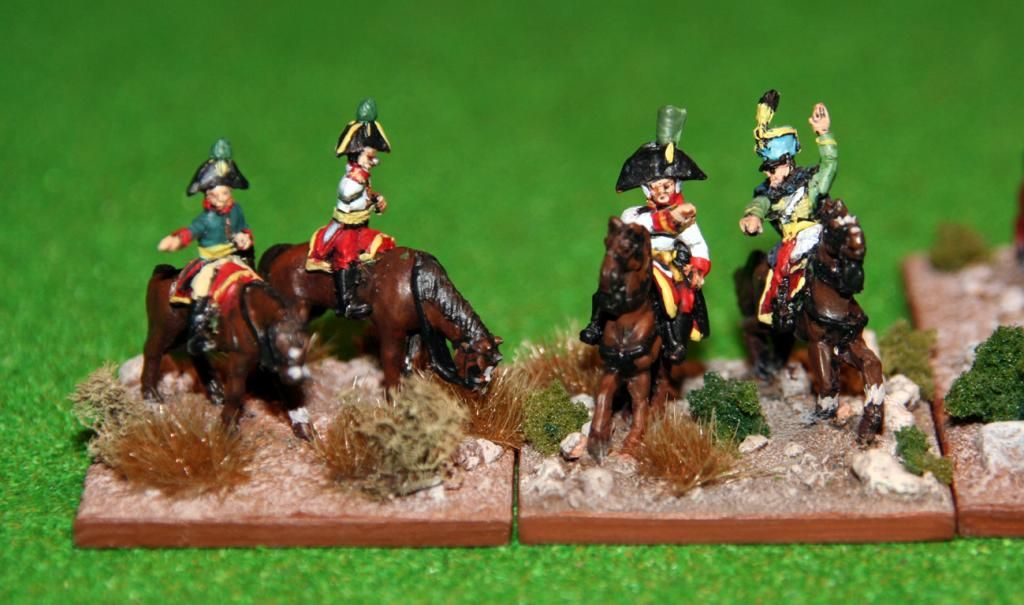
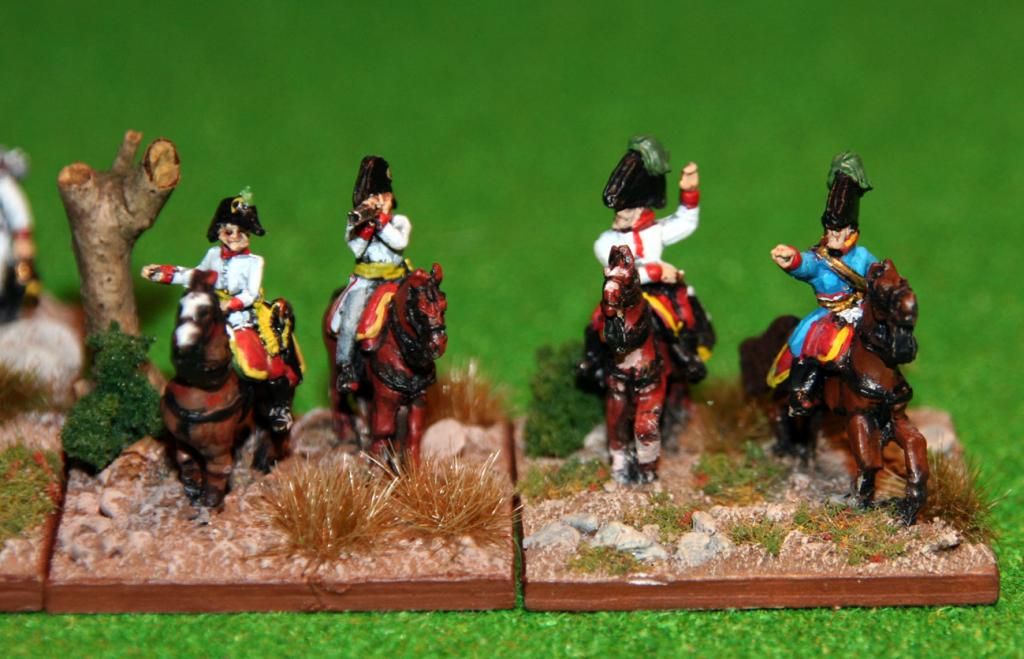
 So, here are my painted Generals and General Majors....


The sets above are Blue Moon (left) and Old Glory (right).

 
These sets are  Warmodelling (left) and Old Glory (right).


And here are the Blue Moon (right) beside Warmodelling (left). Those two brands match quite well in my opinion.

After painting the new generals and seeing them side by side with other makes they fit in really well, even though the figures themselves had looked smaller. The biggest difference that I now see when comparing the various makes is that the Old Glory figures seem too large and bulky, especially those massive bicorne hats. I think I may dump those figures as I complete the Blue Moon ones.

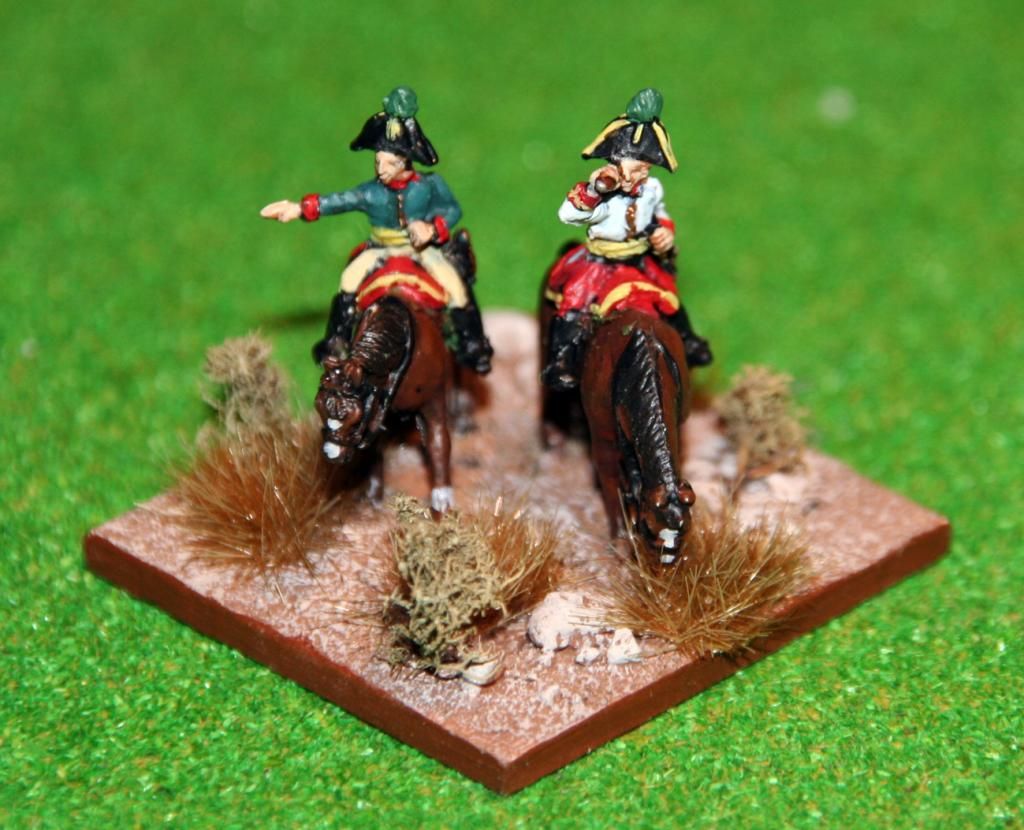
I still haven't decided who this base will represent, but here are a few more pictures to let you see how nice these figures are. I also think I need some practise on painting horses. I don't think I'm getting them quite right.